
Alpine willow
Salix alpina
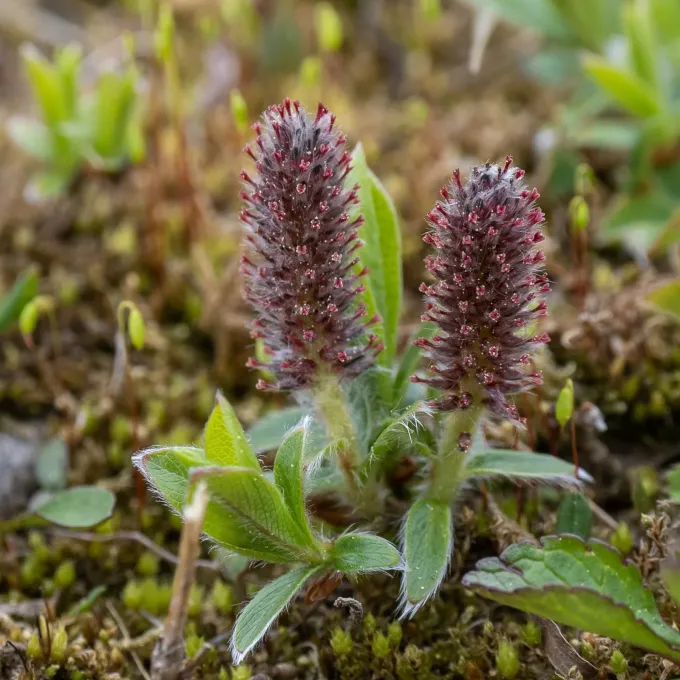
Description
Growing requirements
The Alpine willow (Salix alpina) is a member of the Salicaceae family, recognized as a dwarf, prostrate shrub adapted to the challenging environments of high-altitude mountain ranges.
Native to the mountains of Europe, this plant is naturally found in rocky crevices and alpine meadows, which explains its preference for well-drained, nutrient-poor, and stony soils.
In terms of climatic requirements, Salix alpina thrives in cool, alpine-like conditions with high light exposure and requires protection from extreme summer heat, which can stress the plant.
Cultivation of this species necessitates careful site selection; it should be planted in areas with excellent drainage to prevent root suffocation, often being used in rock gardens.
Regular maintenance involves keeping the soil moisture consistent but never waterlogged, ensuring the plant receives adequate aeration to support its delicate root system.
Main diseases and pests
Powdery mildew represents the primary fungal threat to the Alpine willow, particularly when stagnant air and humidity levels remain high around the dense, low-growing foliage.
Aphids can be problematic during the growing season, clustering on the undersides of leaves and on soft new growth, necessitating early intervention to maintain plant vigor.
Leaf spot diseases, caused by various fungal pathogens, may occur during wet, cool weather, often necessitating the removal of infected plant material to stop the spread.
Root rot is almost exclusively associated with improper site preparation, specifically a lack of proper substrate drainage, which is lethal for this species in the long term.
Integrated pest management, including monitoring and physical removal of affected twigs, is the most effective approach to managing health issues in this specific mountain shrub.