
Simon's poplar
Populus simonii Carriere
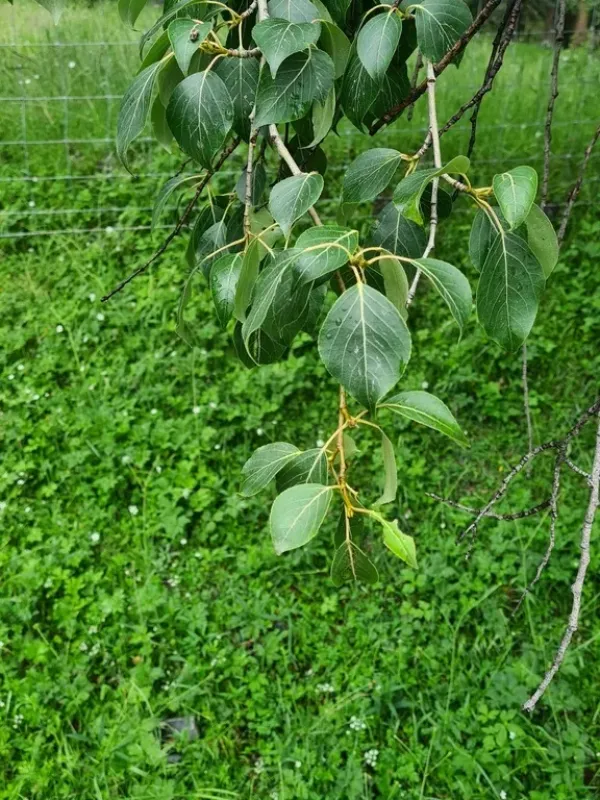
Description
Sowing dates
Propagation of Simon's poplar (Populus simonii) is primarily achieved through stem cuttings. The ideal time for harvesting and planting cuttings is early spring, before the onset of active sap flow in the plant tissues.
Cuttings should be taken from healthy, one-year-old hardened shoots of mother trees. Pieces approximately 20 to 30 centimeters long are planted into well-prepared, moist, and well-drained soil.
In nursery settings, spacing is carefully managed to ensure each seedling receives adequate access to nutrients and light, which is crucial for early vigorous development.
Consistent watering during the establishment phase is essential for root system development. Without adequate moisture, the survival rate of the cuttings can decrease significantly.
While autumn planting is possible in warmer climates, spring planting remains the standard practice in temperate regions to protect young root systems from winter frost damage.
Growing requirements
Simon's poplar is a member of the Salicaceae family, native to Northern China. It is a fast-growing deciduous species known for its elegant, slender, and often drooping branch architecture.
The species prefers fertile, moist loamy soils. It avoids extremely saline environments and performs poorly in waterlogged sites where aeration is severely restricted for the roots.
As a light-demanding species, Simon's poplar requires open sites with full sun exposure. Shaded environments result in sparse foliage and a dramatic reduction in overall growth rates.
The tree exhibits excellent cold hardiness, making it highly suitable for various temperate climates. It can withstand short periods of drought once established, though consistent moisture is preferred.
Botanically, it is distinguished by its rhombic-ovate leaves, which have a glossy green upper surface, providing an attractive appearance throughout the growing season.
Yield
The primary economic value of Simon's poplar lies in its rapid biomass production. It is a prized species for plantation forestry aimed at short-rotation harvests for wood products.
The wood is utilized in the pulp and paper industry, as well as for plywood and lightweight construction materials, thanks to its uniform texture and fast maturation.
In agroforestry, this species serves as an effective windbreak. Its dense canopy reduces wind speed, which helps prevent soil erosion and protects sensitive field crops from environmental stress.
Environmental benefits include carbon sequestration and air purification. The tree is an efficient tool in urban greening projects, contributing to cleaner local microclimates.
Landscape architects favor this species for its structural beauty, using it for formal avenues, parkland planting, and as a fast-growing ornamental choice for large spaces.
Main diseases and pests
Fungal diseases are among the most significant threats to Simon's poplar, particularly leaf rust and bark canker. These conditions often proliferate in stagnant, overly humid conditions.
Insect pests such as leaf beetles and poplar moths can cause substantial damage by consuming foliage, which weakens the tree and significantly lowers its decorative and commercial value.
Sanitation practices, such as removing infected branches and thinning stands to improve airflow, are effective measures in mitigating the spread of pathogens.
- Cytospora canker, which attacks weakened or frost-damaged bark.
- Leaf miners, which disrupt photosynthesis by feeding inside the leaf tissues.
- Boring insects that target the trunk and weaken the structural integrity of the tree.
Integrated pest management, including the use of targeted insecticides and maintaining tree vigor through proper site selection, is the most effective strategy for plantation health.