
Quaking aspen
Populus tremuloides Michx.
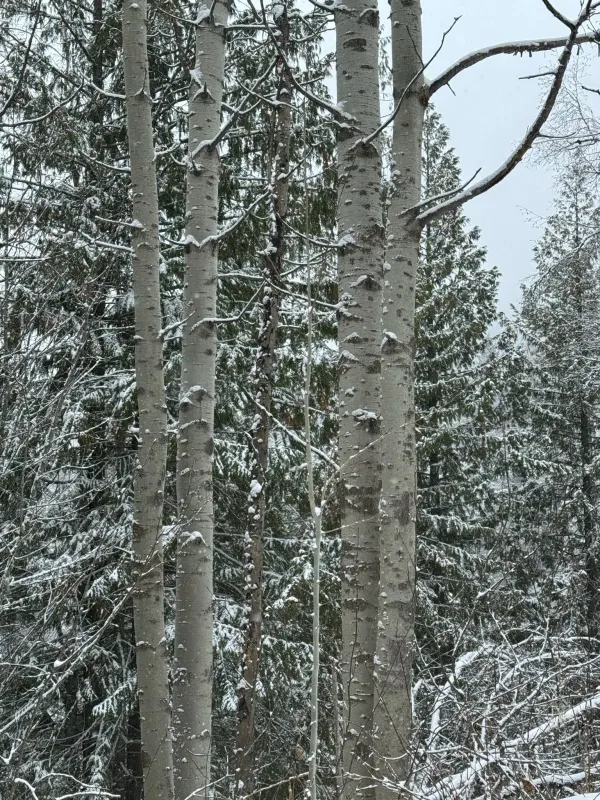
Description
Growing requirements
Quaking aspen (Populus tremuloides Michx.) is a prominent member of the Salicaceae family, recognized for its widespread distribution across North America. This species is shade-intolerant and thrives in environments where it can receive direct sunlight for the majority of the day.
The tree requires well-drained, nutrient-rich soils to reach its maximum growth potential. While it can survive on various site types, including sandy or rocky terrains, its development is significantly faster and more robust when grown in deep, loamy soils with adequate moisture levels.
In terms of climate, the species is remarkably cold-hardy, adapting well to regions with harsh winters and short growing seasons. Proper moisture management is essential during the early stages of establishment, especially in drier environments where supplemental irrigation may be necessary.
Agricultural management for Quaking aspen involves careful site preparation, ensuring that the soil is prepared to support rapid root development. Because it is a clonal species, it often spreads through root suckering, which must be managed during silvicultural practices to optimize spacing.
Economic utility of this tree is extensive, serving as a vital raw material for the pulp and paper industry, as well as for plywood and structural board production. Additionally, it is increasingly valued for its role in biodiversity preservation and carbon sequestration efforts.
Yield
Yield metrics for Quaking aspen are highly favorable, as the species is classified as a fast-growing hardwood. Managed stands can produce high volumes of merchantable timber in relatively short timeframes, making it a highly attractive option for sustainable forestry investments.
Main diseases and pests
The primary pathological threats include Hypoxylon canker, which remains a leading cause of mortality in mature stands. Strict adherence to site selection and healthy stocking densities is recommended to mitigate the risk of pathogen spread within the plantation.
Pest management focuses on controlling leaf-eating insects and wood-borers that can impact the structural integrity of the timber. Monitoring programs and timely intervention are crucial for protecting the forest canopy and ensuring the long-term health of the commercial aspen crop.