
White poplar
Populus alba L.
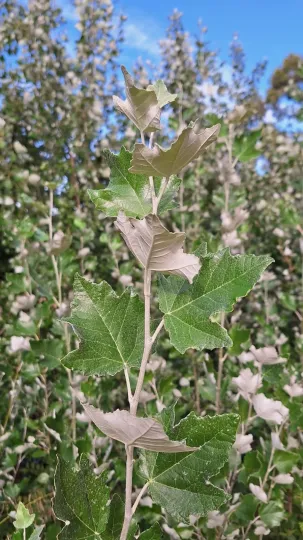
Description
Growing requirements
White poplar (Populus alba L.) is a fast-growing deciduous tree species belonging to the Salicaceae family. It is recognized for its distinctive white-tomentose leaves and ability to thrive in riparian environments.
The species is native to large parts of Europe, Central Asia, and North Africa. It is widely cultivated for timber production, soil erosion control, and ornamental purposes due to its rapid biomass accumulation.
The tree thrives in deep, moist, fertile soils, particularly in alluvial plains. It shows significant tolerance to periodic flooding and moderately saline soils, which makes it a versatile candidate for land rehabilitation.
For successful establishment, white poplar requires full sun exposure. It is highly resilient to wind and low temperatures, allowing for extensive use in windbreaks and shelterbelts across various climatic zones.
The wood is lightweight, soft, and easy to process, making it an essential resource for the paper pulp industry, veneer production, and interior furniture components.
Main diseases and pests
White poplar stands can be vulnerable to several fungal diseases, such as Cytospora canker and leaf rust, which can significantly impact the tree's health and aesthetic value.
Major insect pests include various species of poplar beetles, defoliators, and wood borers. These pests can weaken the trees and lead to decreased growth rates or secondary infection susceptibility.
Management strategies should focus on selecting resistant cultivars and maintaining proper stand density to promote vigorous growth, which helps trees naturally resist mild infestations.
Preventive maintenance involves removing and destroying infected wood to break the life cycle of pathogens and keep the plantation free from severe pest pressure.
Implementing a strict monitoring system is crucial for identifying early signs of distress, allowing for targeted interventions before pests or diseases cause widespread damage.