
Wilson's poplar
Populus wilsonii
Description
Growing requirements
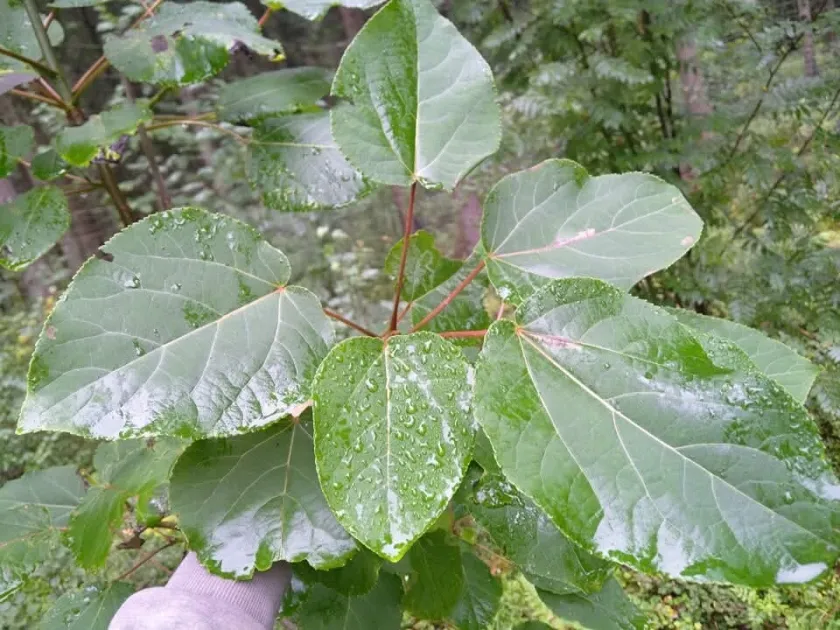
Wilson's poplar (Populus wilsonii) is a distinctive member of the Salicaceae family, native to central and western China. It is highly valued in ornamental forestry for its large, broadly ovate leaves and impressive growth habit, often reaching significant heights in its natural mountain habitat.
To cultivate this species successfully, one must provide deep, fertile, and well-drained soils. While it thrives in moist environments similar to its native riverine valleys, it strictly avoids stagnant water, which can lead to root decay in poorly aerated conditions.
The tree requires full sun exposure to maintain its structural integrity and leaf vitality. In landscapes, it performs best when planted in spacious areas where it can develop its wide, branching canopy without competition for sunlight.
Climatic requirements focus on a temperate environment with sufficient annual rainfall. While the species is relatively hardy, young trees benefit from protection against harsh, desiccating winds that can damage tender foliage during the early stages of development.
Agronomic maintenance should focus on mulching to preserve soil moisture, balanced fertilization during the spring growth flush, and periodic formative pruning to remove crossing branches and maintain the desired aesthetic shape.
Main diseases and pests
The primary pathological threats include fungal leaf spots and cankers, which are often exacerbated by high humidity and dense planting patterns that limit air circulation throughout the tree crown.
Insect pests, such as leaf beetles and wood-boring larvae, pose a significant risk to the plant's health. Borers, in particular, can tunnel into the trunk and branches, causing structural instability and facilitating secondary fungal infections.
Scale insects and aphids can cause stunted growth by feeding on sap; infestation signs include honeydew secretion and leaf curling, which necessitates prompt intervention to prevent secondary problems like sooty mold.
Implementing a rigorous sanitation program, which involves pruning out infected limbs and destroying affected foliage, is essential to mitigate the spread of pathogens throughout the season.
Chemical control should be used judiciously, prioritizing systemic insecticides for borer control during the early stages of infestation, while adhering to local environmental regulations to protect beneficial insects.