
Wettstein poplar
Populus wettsteinii
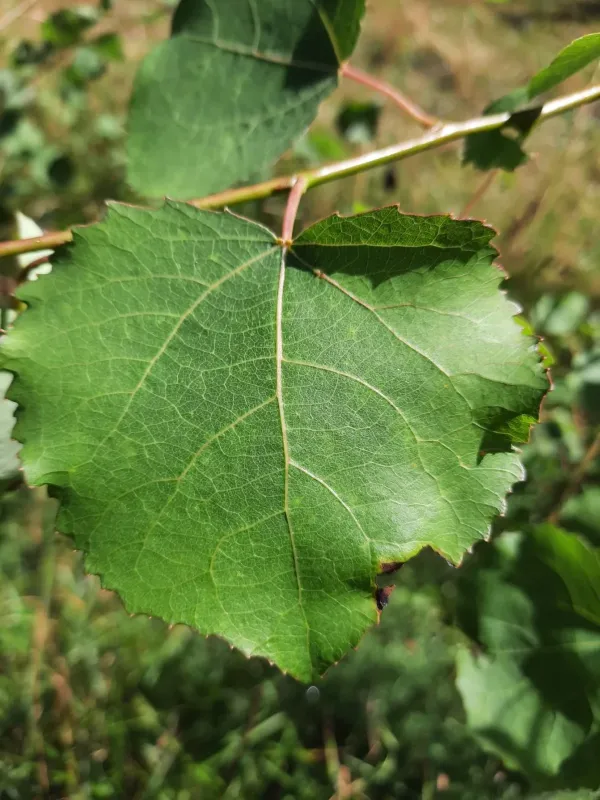
Description
Growing requirements
Wettstein poplar (Populus wettsteinii) is a member of the Salicaceae family. It is a productive hybrid variety commonly selected for intensive forestry, plantation establishment, and land reclamation projects.
The culture has high water demands. It thrives best in deep, fertile soils with reliable moisture availability. Floodplain areas with a consistent water table provide the best conditions for rapid development.
It is a light-demanding species. For optimal height and diameter growth, it requires full sun exposure and sufficient spacing to prevent competition between individual trees in a plantation.
The climate should be temperate, with a sufficiently long growing season. Although the species is resilient, it performs best in regions where late spring frosts do not severely impact the growth cycle.
Agricultural practices for this poplar include deep soil preparation before planting and strict control of weeds during the first three years, as competition for nutrients significantly impacts survival rates.
Yield
The primary use of Wettstein poplar is for the production of high-quality pulpwood. The wood's structural uniformity makes it an ideal raw material for the modern paper and cardboard industry.
Due to its fast-growing nature, it is widely utilized for short-rotation forestry. This allows landowners to harvest wood products more frequently compared to traditional hardwood silviculture.
The timber is also used in the manufacturing of plywood and veneer. Its lightweight properties and ease of processing make it suitable for a wide range of interior and packaging applications.
Furthermore, it serves as a source for biomass energy. Processing poplar wood into pellets or chips provides a sustainable fuel option, supporting the circular bio-economy in rural areas.
To maximize yields, it is recommended to maintain uniform stand density. Proper silvicultural management, including periodic thinning, ensures the development of high-quality industrial timber.
Main diseases and pests
The primary phytosanitary risks include fungal diseases such as leaf rust and various types of canker that can affect the bark and stem, potentially leading to tree mortality under stress.
Insects like the poplar leaf beetle are significant threats. They can cause widespread defoliation, which severely limits the tree's photosynthetic capability and reduces annual biomass increment.
Stem borers pose a serious long-term threat to the structural integrity of the tree. Effective management requires constant monitoring and the removal of heavily infested individuals.
Integrated pest management (IPM) is essential for maintaining plantation health. This includes the use of biological controls and selective application of insecticides during high-risk periods.
Maintaining high diversity and proper sanitation in the surrounding environment helps keep disease pressure at manageable levels, ensuring the long-term productivity of the poplar stands.