
Violet poplar
Populus violascens
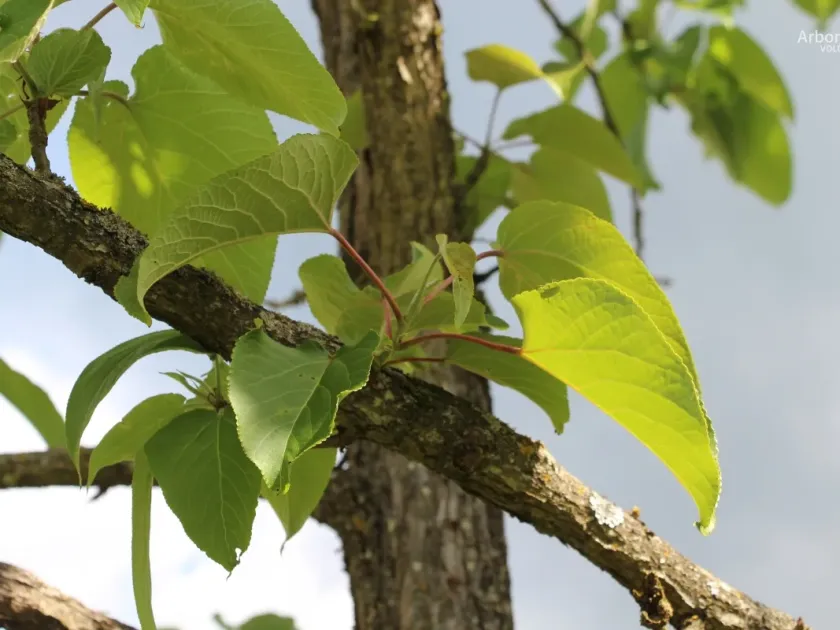
Description
Growing requirements
Populus violascens, commonly known as the violet poplar, belongs to the Salicaceae family. It is native to East Asia, primarily thriving in riverine habitats where moisture levels remain consistently high throughout the growing season.
Cultivation of this species requires deep, fertile, and well-drained soils. Loamy or sandy-loam soils are ideal, as they provide sufficient structure for root development while preventing the soil compaction that often stunts the growth of fast-growing poplar varieties.
The tree is classified as a heliophilic species, meaning it requires full sun to achieve optimal growth rates. In forestry plantations, proper spacing is essential to ensure that every individual tree has adequate access to sunlight, which prevents the lower branches from dying off prematurely.
Climate adaptability is one of the key traits of this poplar. It exhibits significant cold tolerance, making it suitable for temperate regions. However, for maximum biomass production, it prefers regions with a long frost-free period and high annual rainfall to support its transpiration needs.
Proper agronomic management involves soil aeration and weed control, particularly during the establishment phase. Keeping the area around the base of the saplings free from competitive vegetation significantly improves nutrient uptake and reduces the risk of moisture stress during the first years.
Main diseases and pests
Violet poplar is susceptible to several fungal diseases, most notably Cytospora canker. This pathogen enters the tree through wounds or pruning cuts, causing necrotic lesions on the bark that can eventually girdle the stem if left untreated.
Stem-boring insects, such as beetles of the Cerambycidae family, represent a major biological threat. Their tunneling activities weaken the structural integrity of the wood and disrupt the flow of nutrients within the tree, often leading to canopy thinning or death.
Leaf-feeding pests, including the poplar leaf beetle, can cause severe defoliation during the peak summer months. While mature trees may survive such attacks, repeated defoliation events significantly decrease the tree's annual growth increment and overall vigor.
Effective pest management relies on strict sanitation protocols, including the immediate removal and destruction of heavily infested wood. Maintaining tree vigor through proper fertilization and watering helps the plant develop natural resistance to minor infestations.
Integrated Pest Management (IPM) strategies for Populus violascens include the use of targeted biological controls and preventative fungicide sprays in nurseries. Regular inspections are necessary to detect early warning signs of disease spread or pest population surges.