
Black cottonwood
Populus trichocarpa
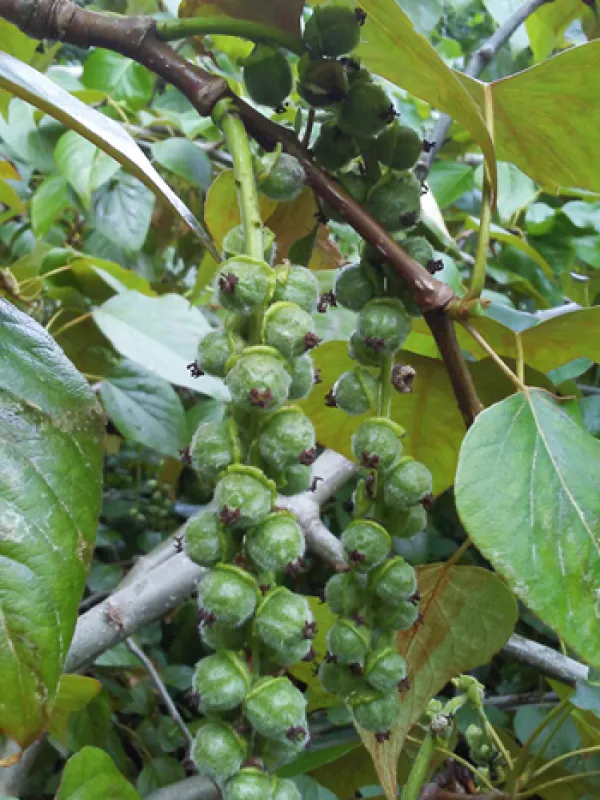
Description
Sowing dates
Black cottonwood is primarily propagated through vegetative cuttings, which are harvested during the dormant season. Planting in nurseries or plantations is carried out in early spring as soon as the soil thaws and reaches a temperature of 5–8 degrees Celsius to facilitate rooting.
For industrial plantation establishment, cuttings 20–30 cm long with at least two or three buds are typically used. Proper depth and soil moisture at the time of planting are critical to ensure a high survival rate and vigorous initial growth.
When using seed propagation, the seeds must be collected immediately upon maturity within their capsules, as they lose their viability within a few days. They should be sown promptly into moist, nutrient-rich seedbeds.
Planting density depends on the final application: for high-quality timber, spacings of 2x2 or 3x3 meters are common. For short-rotation coppice aimed at biomass production, planting densities of 10,000 to 20,000 trees per hectare are utilized.
Early-stage management requires diligent weed control, as competing vegetation can severely stunt the growth of young saplings during their first two years of development.
Growing requirements
As a member of the Salicaceae family, Black cottonwood is renowned for its rapid growth rate, which demands fertile and consistently moist soil. The species thrives in deep, well-drained alluvial soils along riverbeds with neutral to slightly acidic pH levels.
The tree is highly light-demanding, necessitating sufficient spacing to allow full crown development. In dense, unmanaged stands, lack of solar radiation significantly slows down the growth rate and decreases overall biomass yield.
Climatic requirements include an annual rainfall of at least 500–600 mm distributed across the growing season. While the species exhibits significant cold tolerance, late spring frosts can be detrimental to emerging tender shoots.
Optimal growth is observed in silty or sandy loam soils with groundwater levels reaching between 1.5 and 2 meters. Waterlogging or stagnant water can cause root rot and physiological stress, hindering the tree's health.
In regions prone to drought, irrigation systems are essential to maintain high annual growth increments and ensure the long-term profitability of the plantation.
Yield
Populus trichocarpa is recognized as one of the most productive timber species in temperate zones. In intensive cultivation systems, annual wood volume increments can reach 20–30 cubic meters per hectare.
When grown for bioenergy purposes in short-rotation cycles, dry biomass yields can range from 10 to 15 tonnes per hectare per year. This makes it a highly attractive crop for renewable energy projects.
Peak productivity occurs within the first 15–20 years of the tree's life. Beyond this age, the linear growth rate typically slows down, and harvesting the crop for industrial use becomes the most efficient management decision.
The use of genetically improved clones and hybrid varieties significantly enhances the yield of high-quality timber, providing better stem straightness and higher resistance to environmental stressors.
Overall yield is highly dependent on site-specific soil fertility, the use of nitrogen fertilization during the early years, and the implementation of effective weed and pest management practices.
Main diseases and pests
The species is susceptible to various fungal diseases, with Septoria leaf spot being one of the most common issues, causing premature leaf drop and branch dieback. Rust fungi can also affect the foliage during humid seasons.
Insect pests, such as leaf beetles and wood-boring insects, represent a significant threat to young plantations. These pests can damage the canopy and the inner wood, weakening the tree's overall vigor.
Disease and pest management are managed through integrated methods, including the removal of infected wood, maintaining plantation hygiene, and the targeted application of biological or chemical treatments when necessary.
Physical damage to the bark, caused by mechanical equipment or wildlife, can lead to stem infections and internal decay, which significantly reduces the quality and market value of the harvested wood.
Regular health monitoring is essential for early detection of pest infestations, allowing for rapid intervention before the spread of damage compromises the economic performance of the entire stand.
Harvesting
Harvesting for biomass is typically mechanized using specialized machinery that chips the stems directly in the field, which minimizes labor costs and optimizes the raw material supply chain for energy facilities.
Timber harvest occurs once the trees reach the target diameter and height, which usually happens between the 15th and 25th year, depending on the specific rotation goals and site conditions.
A major economic advantage is the species' ability to coppice effectively after being cut, meaning the root system can produce new shoots, allowing for multiple harvest cycles without needing to replant.
The winter months are considered the optimal time for harvesting, as the wood has lower moisture content during this period, simplifying transportation, storage, and subsequent industrial processing.
Following the conclusion of the final rotation, site management involves stump removal or mechanical cultivation to prepare the land for either reforestation or a transition to another land-use purpose.