
Sargent's cottonwood
Populus sargentii
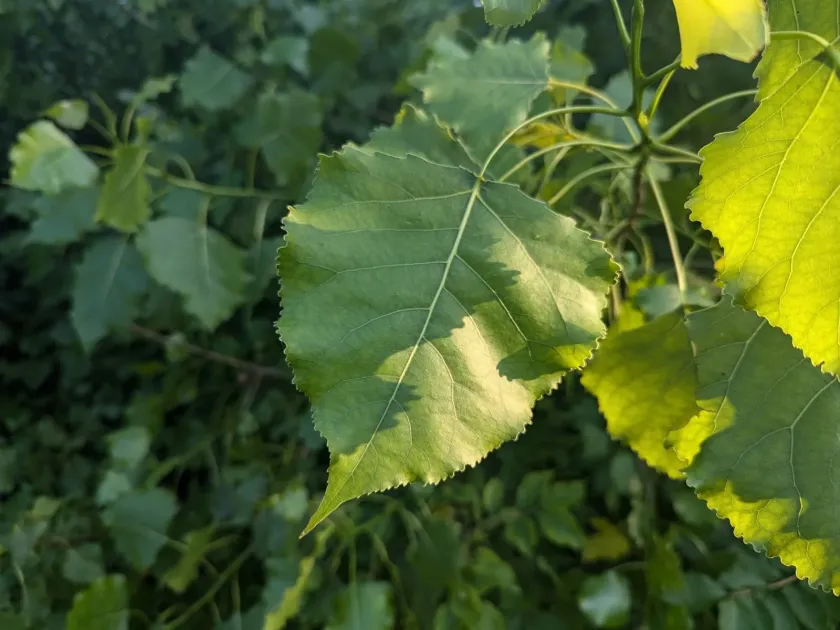
Description
Growing requirements
Sargent's cottonwood (Populus sargentii) is a deciduous tree belonging to the Salicaceae family. It is native to the Great Plains of North America, where it serves as a critical component of riparian ecosystems along rivers and floodplains.
This species is well-known for its vigorous growth habit and ability to colonize disturbed sites quickly. It thrives in open, sunny environments and is highly intolerant of shade, necessitating clear-cutting or wide spacing in forestry management.
The tree demonstrates remarkable hardiness against extreme climatic variations, including harsh winters and hot, dry summers. Its biological structure allows for high transpiration rates, which helps regulate moisture levels in the surrounding soil profile.
For optimal growth, Sargent's cottonwood requires deep, moist, and well-aerated soils. It performs best in alluvial deposits, such as sand or sandy loams, and can handle occasional flooding without suffering significant root damage.
In addition to industrial uses, such as pulpwood production and biomass fuel, this species plays a vital role in ecological restoration, providing nesting sites for birds and erosion control on riverbanks.
Main diseases and pests
Sargent's cottonwood is susceptible to a variety of fungal pathogens, with leaf rust and stem cankers being the most prevalent. These diseases are more likely to occur in stands with poor airflow and high humidity levels during the growing season.
Insect pests pose a significant threat to tree vitality, particularly wood-boring beetles, which create galleries that disrupt vascular transport. Severe infestations can eventually lead to canopy dieback or the death of the entire tree.
Defoliating insects, such as leaf beetles, can strip a tree of its foliage, leading to reduced photosynthetic capacity and stunted annual growth. While most healthy trees can recover, frequent defoliation over several years can severely weaken them.
Integrated pest management strategies should focus on thinning stands to increase sunlight penetration and ensuring trees are not stressed by drought, which is a major precursor to insect attacks.
Regular monitoring of the bark and leaf condition is essential for identifying potential issues early. In cases of significant infestation, localized treatment or the removal of heavily affected trees may be necessary to protect the remaining stand.