
Petrowsky Poplar
Populus petrowskiana
Description
Growing requirements
Petrowsky Poplar (Populus petrowskiana) is a high-yield hybrid belonging to the Salicaceae family, derived from the cross-breeding of black poplar and laurel-leaf poplar. It is widely recognized for its rapid growth rate and strong wood structure.
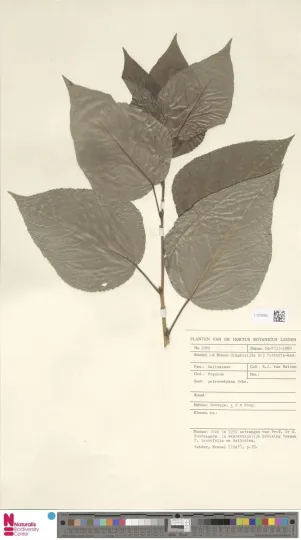
The tree exhibits a straight, columnar trunk and an extensive root system, allowing for significant height development in favorable ecological conditions. The leaves possess a distinct rhombic shape, which serves as a key morphological characteristic for species identification.
This crop thrives best in deep, fertile, and well-moistened soils, including alluvial deposits. While it shows tolerance to temporary waterlogging, it performs poorly in highly saline environments or permanently arid sites.
Climatic adaptability is a significant asset of Petrowsky Poplar, as it displays excellent winter hardiness and can endure harsh, continental climates. It is also highly resilient to urban pollution, making it an ideal candidate for roadside and city park landscaping.
Agrotechnical management requires the use of high-quality saplings planted in early spring. Optimal spacing is essential to ensure maximum growth potential and to prevent resource competition within the plantation.
Yield
The primary economic value of Petrowsky Poplar lies in its utility for the pulp and paper industry, as well as the production of timber for crating and light construction. The biomass turnover is rapid, offering a high return on investment for forestry projects.
The wood is appreciated for its lightweight properties, ease of machining, and uniformity, which makes it suitable for various industrial applications. Sustainable plantation management ensures a steady output of raw materials for manufacturers.
Beyond industrial timber, this poplar species is highly effective in land reclamation and soil erosion control projects. Its deep roots help stabilize riverbanks and manage groundwater levels in swampy areas.
In landscaping, Petrowsky Poplar is utilized to create noise buffers and aesthetic windbreaks. Its rapid growth makes it a preferred choice for transforming barren landscapes into green environments in a short timeframe.
Systematic thinning and professional forest management practices are necessary to maximize the volume of merchantable timber produced by the plantation. Proper care guarantees the health and longevity of the stand.
Main diseases and pests
The main pathological threats to this poplar include leaf rust and cytospora canker, which are often triggered by improper environmental conditions or low tree immunity. Routine sanitary inspections are crucial for managing these threats.
Insects like the poplar leaf beetle are common pests that can consume foliage and stunt the growth of young trees. In severe cases, targeted biological pest control is necessary to prevent significant yield losses.
Preventive measures involve maintaining optimal spacing to ensure proper air circulation, which reduces the humidity levels that favor fungal growth. Using certified, disease-resistant clones is the best way to safeguard the plantation.
Severe meteorological events, such as heavy ice storms or strong winds, can occasionally cause structural damage to the branches. Selecting sheltered planting sites helps minimize such risks to the developing forest stand.
An integrated approach combining ecological monitoring and precise silvicultural practices remains the standard for maintaining healthy Petrowsky Poplar populations.