
Canadian poplar
Populus ontariensis
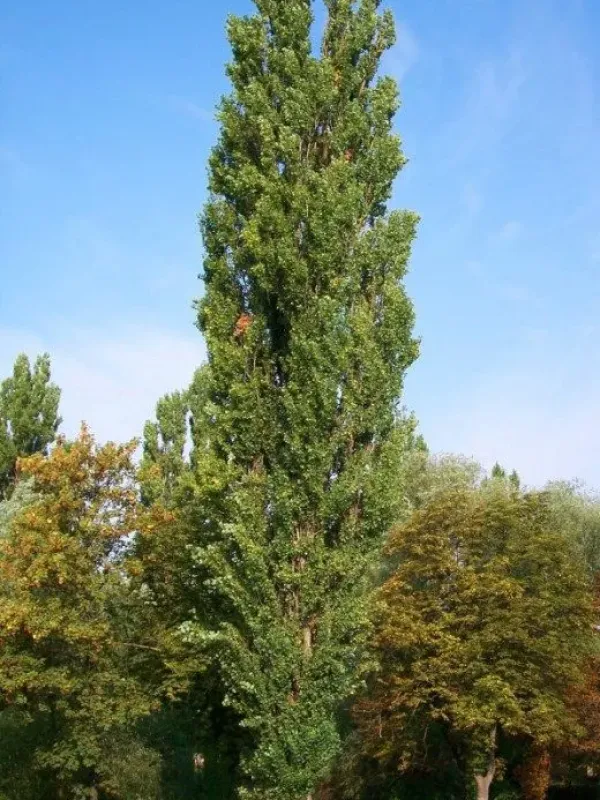
Description
Sowing dates
Propagation of Canadian poplar (Populus × canadensis) on a commercial scale is primarily carried out through vegetative methods. Planting is performed in early spring, before sap flow and bud break, using hardwood cuttings.
The optimal time for transplanting saplings into tree nurseries or final locations is from March to April, depending on soil temperature. Ensuring adequate substrate moisture during the rooting phase is critical.
When using seed propagation, which is less common and reserved for breeding purposes, sowing is conducted immediately after seed maturation in late spring. Poplar seeds lose viability rapidly, necessitating immediate sowing into loose, prepared soil.
Planting density in plantations depends on the intended end-use of the timber. For pulpwood production, a spacing of 2.5x2.5 or 3x3 meters is typically used to ensure optimal light exposure to the crown.
Intensive cultivation requires soil preparation in autumn, including deep plowing and the application of organic fertilizers to stimulate root system development during the tree's first year.
Growing requirements
Canadian poplar is a light-demanding crop that requires open spaces for active photosynthesis. In conditions of insufficient light, the tree slows its growth, and the trunk quality becomes unsuitable for industrial processing.
The crop has high soil moisture requirements, preferring alluvial, humus-rich loamy soils. It does not tolerate prolonged drought, so in regions with low precipitation, drip irrigation systems are necessary.
The optimal pH range for the successful development of poplar is 6.0–7.5. The tree is highly sensitive to soil salinity and excessive acidity, which negatively impact the uptake of vital micronutrients.
Climatic conditions should correspond to temperate zones with mild winters. Despite its high winter hardiness, late spring frosts can damage young shoots, requiring the selection of protected sites for planting.
Good agricultural practice includes regular cultivation of the tree base and weed control during the first 3 years of life. Formative pruning is also essential to obtain straight trunks free of large side branches.
Yield
Canadian poplar is valued for its exceptionally high biomass growth rate. Under favorable conditions, the height increase can reach 1.5–2 meters per year, making it one of the most productive tree species globally.
In commercial plantations, the rotation cycle (from planting to harvesting) usually ranges from 15 to 25 years. During this period, the tree is capable of forming a significant volume of timber suitable for processing.
Yield is measured in wood volume per hectare, which can reach 300–450 cubic meters with proper maintenance. These figures depend significantly on planting density and the level of nitrogen fertilization applied.
For energy plantations, where trees are grown for wood chips, the harvest cycle is reduced to 5–8 years. In this case, dense planting is important to ensure maximum green mass density per unit of area.
Economic uses include the production of plywood, packaging materials, paper, and pulp. Due to its uniform structure, the wood is easily processed mechanically and can be readily treated with preservatives.
Main diseases and pests
The main threats to this crop are fungal diseases, such as leaf rust and black spot. These infections can cause premature defoliation, which drastically reduces the plant's growth intensity.
Bacterial bark necrosis is a serious pathology leading to tree death or a significant decrease in the commercial value of the trunk. Affected specimens require immediate sanitary felling and disposal.
Among pests, leaf rollers, poplar moths, and various wood-boring beetles are the most dangerous. These insects damage both foliage and the cambium layer, making the tree vulnerable to secondary infections.
To combat pests, systemic insecticides are used during the growing season. In forestry practice, the use of beneficial insects (entomophages) is also common to naturally control pest populations.
- Prevention: timely pruning of diseased branches.
- Monitoring: annual trunk inspections for cracks or exudates.
- Agrotechnics: maintaining spatial isolation when establishing new plantations.
Harvesting
Harvesting of Canadian poplar is carried out during the winter season when sap flow ceases. This ensures better wood quality and longer durability during subsequent transport and storage.
Timber harvesting utilizes both manual tools and specialized mechanical harvesters. Mechanized harvesting significantly speeds up the process and optimizes bucking operations directly in the plantation.
After felling, it is crucial to properly dispose of stumps to avoid the multiplication of pathogens within the root system. In some areas, stump removal is recommended to prevent soil contamination.
Wood sorting is performed immediately after felling. Pulpwood is sent to paper mills, while high-quality trunks are directed to plywood or furniture manufacturing facilities for further processing.
In plantation management, utilizing coppice regeneration is possible, where new shoots grow from the stump after the tree is cut. This reduces the costs of replanting and accelerates the yield of the next cycle.