
Azara serrata
Azara serrata
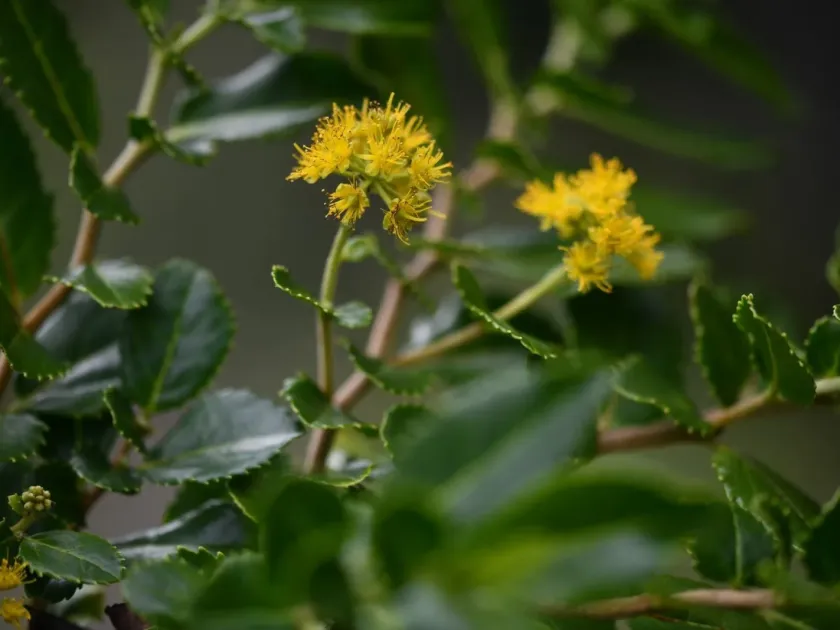
Description
Growing requirements
Azara serrata is an evergreen shrub belonging to the Salicaceae family. Native to the woodlands of Chile and Argentina, it thrives in regions characterized by cool, moist, and temperate climates.
The plant requires a sheltered position in the garden to protect it from cold, drying winds. While it is hardy in many temperate zones, it performs best when planted against a south-facing wall in cooler regions.
For optimal growth, it needs fertile, humus-rich, and well-drained soil. It is highly sensitive to waterlogged conditions, making proper soil drainage a prerequisite for successful cultivation.
Exposure to full sun or partial shade is ideal. In warmer climates, some afternoon shade is beneficial to prevent leaf scorch and maintain the deep green color of its serrated foliage.
General care involves moderate irrigation during dry spells and the application of a balanced fertilizer in spring to support the development of its fragrant, yellow, vanilla-scented flowers.
Main diseases and pests
The primary threats to this shrub include fungal infections such as root rot, which are often caused by poor drainage or excessive soil moisture during the dormant winter months.
Pests such as aphids and scale insects are common. Aphids typically congregate on the new growth, causing curling and yellowing of the leaves, which significantly impacts the plant's aesthetic value.
Management of these pests requires a combination of horticultural oils for scale control and systemic insecticides to handle aphid populations effectively during the peak growing season.
Air circulation is critical to prevent fungal outbreaks; therefore, thinning out the center of the shrub during pruning is a recommended practice to ensure the canopy stays dry and healthy.
Regular inspection of the plant during the spring and summer allows for early intervention, reducing the need for heavy chemical treatments and preserving the health of the plant.