
Podocarpus totara
Podocarpus totara G. Benn. ex D. Don
Description
Growing requirements
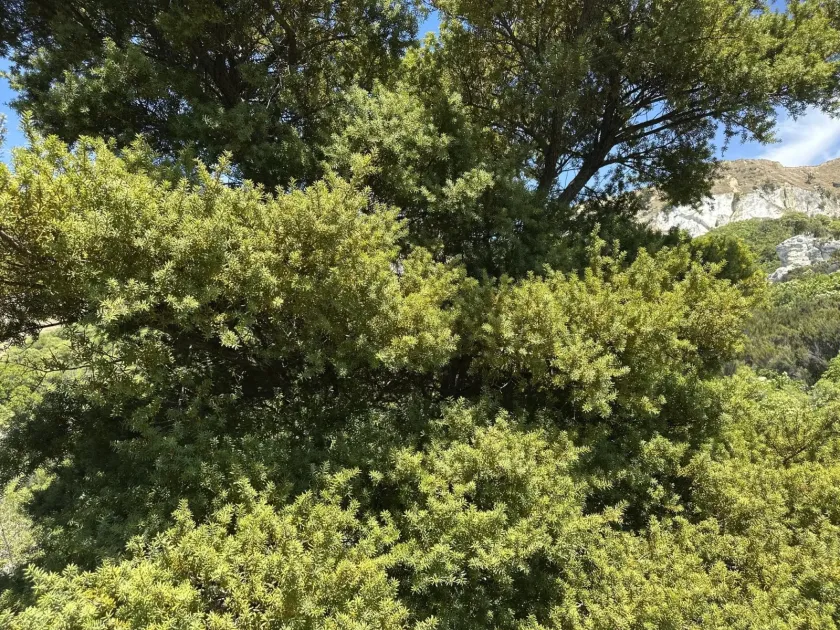
Podocarpus totara is a prominent evergreen coniferous tree belonging to the family Podocarpaceae. It is endemic to New Zealand, where it naturally thrives in a variety of forest habitats ranging from lowland alluvial plains to mountain slopes.
The species is characterized by its exceptionally slow growth rate and longevity. It can grow into a massive tree with a thick, fibrous bark and needle-like leaves that are dark green and leathery, providing a dense canopy throughout the year.
For cultivation, Podocarpus totara requires deep, well-drained, and nutrient-rich soils to support its steady development. It flourishes best in temperate climates with consistent rainfall and high atmospheric humidity, avoiding regions prone to hard frosts.
Agrotechnical practices involve careful site selection to minimize exposure to strong winds during the establishment phase. Proper irrigation management is vital, as the tree requires moist soil but is highly sensitive to waterlogging, which can compromise its root health.
The tree is historically and economically significant for its timber. Totara wood is highly prized for its durability, resistance to rot, and ease of working, making it a preferred material for fine furniture, joinery, and traditional carving.
Main diseases and pests
Common threats to the health of Podocarpus totara include various lepidopteran pests that graze on the foliage of younger trees. Additionally, fungal pathogens affecting the root system can become problematic if soil drainage is insufficient or if the plant is subjected to prolonged water stress.