
Alpine totara
Podocarpus nivalis Hook.
Description
Growing requirements
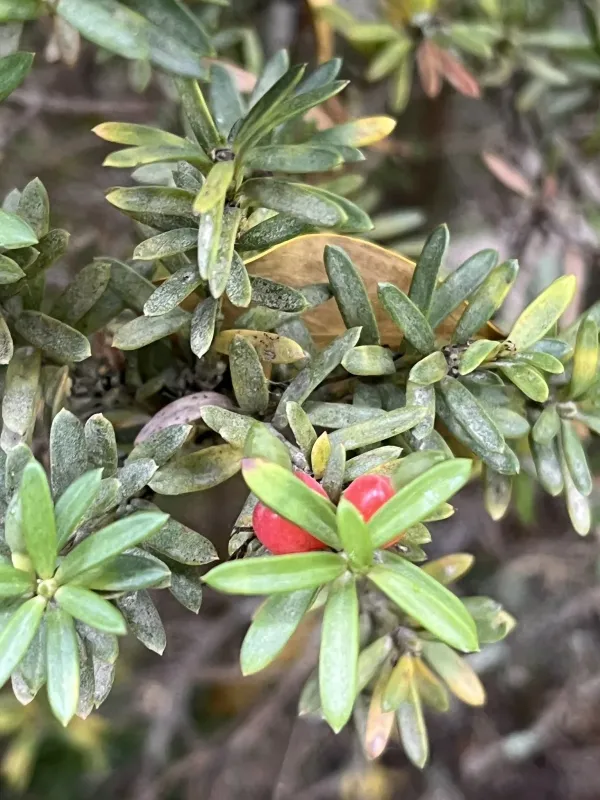
Alpine totara (Podocarpus nivalis) belongs to the Podocarpaceae family. It is a hardy, spreading, evergreen coniferous shrub native to the mountainous regions of New Zealand.
The plant is biologically adapted to survive harsh alpine conditions, including freezing temperatures and persistent snow cover, which gives it significant cold hardiness compared to other species in the genus.
For optimal growth, it requires well-draining, fertile soil that remains moist but never waterlogged. It thrives best in full sun but can tolerate partial shade in warmer climates.
Cultural practices involve maintaining a mulch layer around the base to retain consistent soil moisture and protect the root system from extreme fluctuations in temperature during the winter months.
In landscaping, this species is highly valued as a groundcover, for use in rock gardens, or as a low-maintenance hedge. Its slow growth rate allows it to maintain its desired shape with minimal pruning.
Main diseases and pests
Podocarpus nivalis is generally resistant to most common garden pests and diseases, making it a reliable and low-maintenance choice for professional and amateur horticulturists.
However, the main risk to the plant is root rot, which typically occurs in soils with poor drainage or during prolonged periods of excessive rainfall that prevent root aeration.
Scale insects and spider mites may occasionally infest the foliage, particularly if the plant is grown in containers or in locations with restricted air movement and high heat.
Integrated pest management, including regular inspection and the use of targeted horticultural soaps or oils, is sufficient to control these minor infestations effectively.
By ensuring proper spacing between plants and keeping the foliage clean, growers can significantly reduce the risk of secondary infections and maintain the plant's natural vigor.