
Microstrobos fitzgeraldii
Microstrobos fitzgeraldii
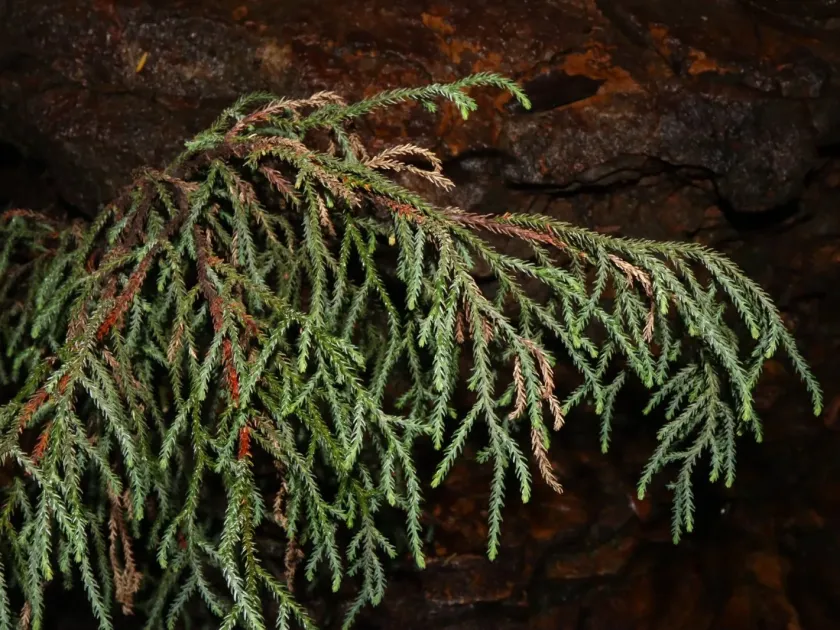
Description
Growing requirements
Microstrobos fitzgeraldii, also known as the Blue Mountains dwarf pine, is a rare conifer belonging to the Podocarpaceae family. This species is native to the Blue Mountains region of New South Wales, Australia.
The plant is highly specialized, naturally growing on damp, vertical sandstone cliffs near waterfalls. Its survival depends entirely on the constant mist and spray generated by the water flow.
Cultivating this species requires precise environmental control. It thrives in high humidity and cool temperatures, mimicking the conditions of its natural cliffside habitat in the southern hemisphere.
The preferred substrate for Microstrobos fitzgeraldii should be acidic, well-draining, and rich in organic matter. Overwatering must be avoided to prevent root suffocation, yet the substrate must never dry out completely.
Botanically, it is recognized for its dense, prostrate or semi-pendulous habit and small, scale-like leaves. Its growth rate is exceptionally slow, which necessitates patience and specific attention to detail in a nursery or garden setting.
Main diseases and pests
The primary threat to wild populations of Microstrobos fitzgeraldii is the alteration of water flow due to climate change. Reduced rainfall and lower waterfall activity directly endanger these sensitive plants.
In cultivation, the species is susceptible to root decay. This occurs primarily due to improper drainage or the use of heavy, water-retentive soils that restrict oxygen flow to the root system.
Spider mites are a significant pest concern when the plant is kept in environments with low atmospheric humidity. Regular misting is an essential practice to suppress mite populations.
Phytophthora pathogens present a major threat, particularly in nursery environments where moisture is often high. Sterilizing equipment and maintaining optimal airflow are crucial prevention steps.
Given its narrow geographic distribution, the species remains critically vulnerable to external stressors, making it a high-priority conservation subject for botanists and horticulturalists.