
Afrocarpus falcatus
Afrocarpus falcatus (Thunb.) C. N. Page
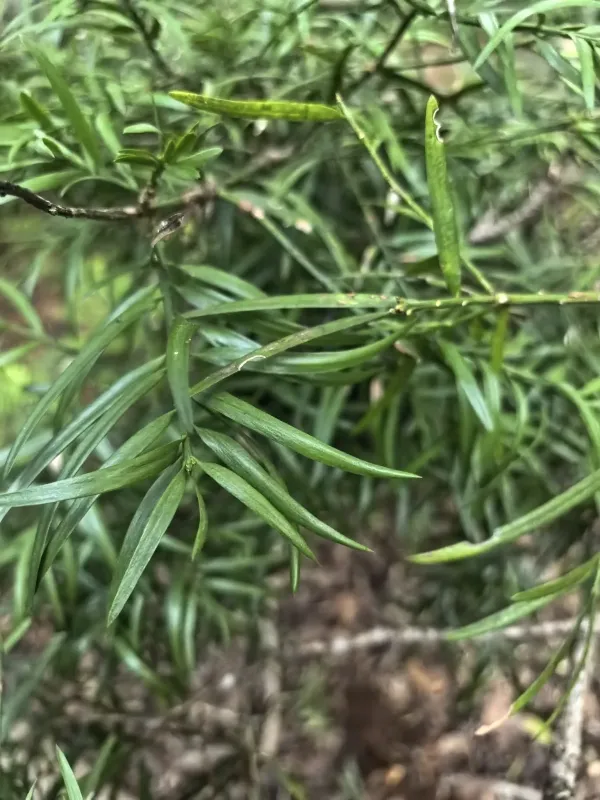
Description
Growing requirements
Afrocarpus falcatus, commonly known as the Outeniqua yellowwood, belongs to the Podocarpaceae family. This species is an important evergreen tree valued for its high-quality timber and ornamental properties.
The culture originates from the forests of South Africa. It thrives in regions with a stable, temperate to subtropical climate, requiring consistent moisture and protection from harsh environmental stressors.
The tree prefers deep, well-draining, and nutrient-rich soils. It demonstrates good adaptability to various loam types, provided that the soil structure supports deep root penetration.
Botanically, it is characterized by its distinct sickle-shaped leaves and slow growth rate. It is an shade-tolerant species in its juvenile stages, which is a key factor for successful reforestation projects.
Agronomic management focuses on long-term growth strategies. Due to its slow development, consistent weed control and protection during the first few years are essential for establishing a healthy stand.
Main diseases and pests
Root rot caused by waterlogging is the most significant threat to the survival of young seedlings. Maintaining proper soil moisture levels through adequate drainage is the primary prevention method.
Pests such as aphids and spider mites may infest the foliage, particularly under conditions of poor ventilation or low humidity. Integrated pest management should be employed to control these outbreaks.
Fungal leaf spots can occur when air circulation is limited, leading to premature leaf drop. Proper spacing between trees is crucial for maintaining a healthy airflow and reducing disease transmission.
Boring insects may affect the bark of mature trees, potentially causing structural damage. Regular inspections of the trunk and branches are recommended for large-scale plantations.
Climate instability, particularly sudden frost, can damage the tender terminal shoots of young trees. Protective measures should be taken in regions susceptible to temperature drops.