
Tristaniopsis glauca
Tristaniopsis glauca
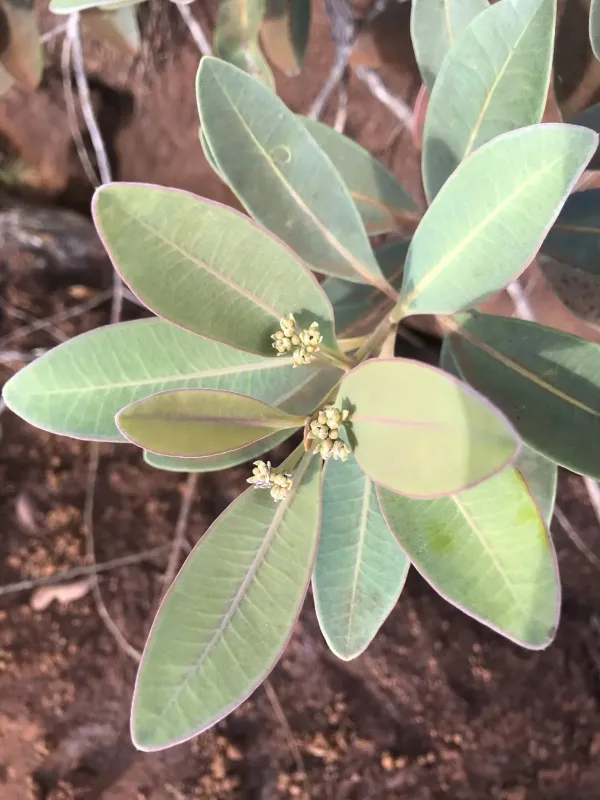
Description
Growing requirements
Tristaniopsis glauca is an evergreen tree species belonging to the Myrtaceae family. It is native to New Caledonia, where it typically thrives in specialized environments characterized by ultramafic soils, demonstrating a high degree of ecological specialization.
Botanically, the plant is distinguished by its leathery, glaucous foliage, which provides the distinctive bluish-grey appearance. As the tree matures, its bark undergoes a characteristic peeling process, revealing smooth wood layers underneath, which adds to its overall ornamental value.
Climate requirements for this species are strictly tied to tropical and subtropical regions. It lacks frost tolerance, making it suitable for outdoor cultivation only in stable, warm climates where temperatures remain consistently above freezing throughout the year.
Regarding soil, the species demands a well-drained substrate to prevent root asphyxiation. It performs best in nutrient-rich but permeable soils and is sensitive to poor drainage, often showing signs of chlorosis or decline if kept in waterlogged conditions for extended periods.
In terms of agricultural and horticultural use, Tristaniopsis glauca is primarily valued as an ornamental specimen in botanical gardens and private collections. It is recognized for its architectural form and is increasingly appreciated in landscape designs in warmer regions.
Main diseases and pests
The primary threats to Tristaniopsis glauca involve fungal pathogens affecting the root system, which are often exacerbated by excessive soil moisture and poor air circulation around the root zone. Proper moisture management is essential to prevent these issues.
Common pests include sucking insects such as aphids and scale insects that feed on the foliage. Integrated pest management, including regular inspection and the targeted use of horticultural oils or insecticides, is necessary to keep the specimens healthy and visually appealing.