
Melaleuca wilsonii
Melaleuca wilsonii
Description
Growing requirements
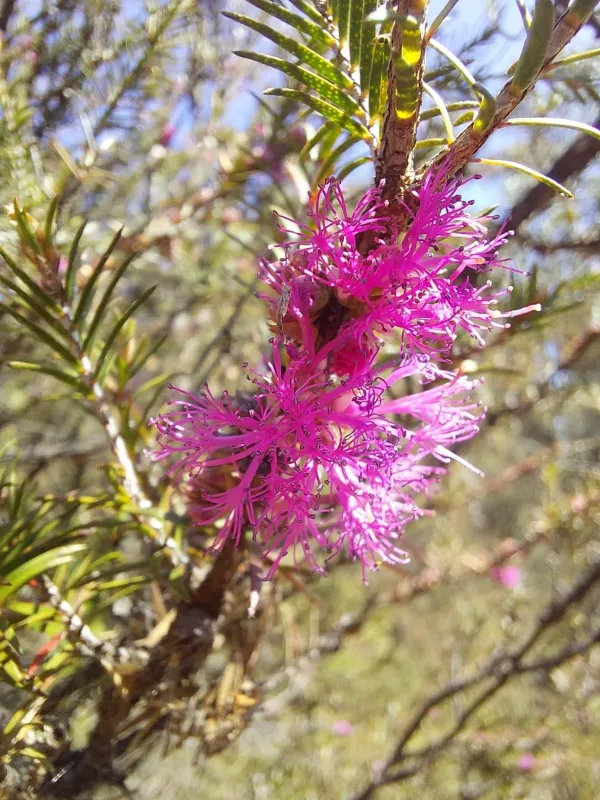
Melaleuca wilsonii, commonly known as the Wilson honey myrtle, belongs to the Myrtaceae family. Native to southeastern Australia, this evergreen shrub is highly valued for its striking, brush-like pink to purple flowers that bloom profusely along its stems.
Cultivation requirements for this species include full sun exposure and well-draining soil. It thrives in sandy or loam-based soils, demonstrating a natural resilience to low-nutrient substrates typical of its native Australian environment.
Agronomic management requires consistent but moderate watering, especially during the establishment phase. While the shrub is drought-tolerant once mature, young plants must be monitored to ensure they receive sufficient hydration without waterlogging the root zone.
The climate preference for this plant is temperate, as it can handle cool winters and warm summers. However, protection from severe frost is recommended to prevent damage to the delicate foliage, making it suitable for moderate climatic zones or greenhouse cultivation.
The primary horticultural use of Melaleuca wilsonii is in ornamental gardening. It serves as an excellent feature plant in native-themed landscapes, rock gardens, or as a dense hedging shrub that provides significant visual appeal and habitat for local pollinators.
Main diseases and pests
The most significant threat to Melaleuca wilsonii is Phytophthora root rot, usually triggered by poor drainage or overwatering. This pathogen attacks the root system, causing rapid decline and foliage discolouration, often resulting in permanent plant loss.
Pests such as scale insects and spider mites can infest the plant, particularly in dry or stagnant air conditions. Management involves using horticultural oils or systemic insecticides to maintain the health and vigor of the shrub.
Fungal leaf spot can occur if the plant is situated in an area with insufficient airflow. Pruning for structural integrity and ensuring adequate spacing between plants can significantly reduce the risk of humidity-related foliage diseases.
Nematode infestations can be a concern in sandy soils. Integrated pest management, including the use of healthy, disease-free nursery stock, is essential to prevent the spread of soil-borne pathogens within the garden environment.
Regular maintenance, including the timely removal of dead or crossing branches, is critical to preventing infection sites. Balanced fertilization is also recommended to ensure the plant remains robust enough to withstand common environmental stressors and opportunistic pests.