
Melaleuca teretifolia
Melaleuca teretifolia
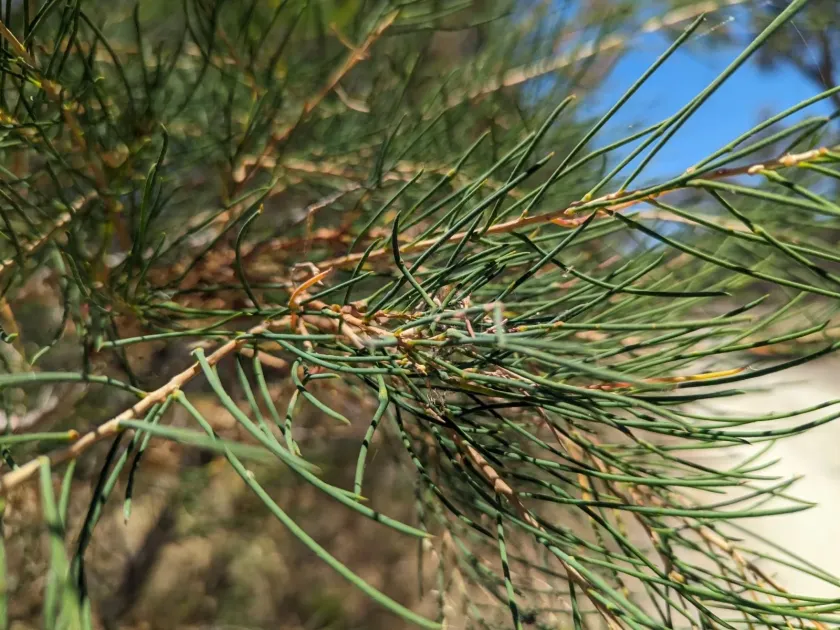
Description
Growing requirements
Melaleuca teretifolia, a member of the Myrtaceae family, is a distinct shrub or small tree native to the Australian continent. It is well-adapted to habitats featuring sandy soils and requires significant exposure to sunlight to maintain its physiological health and decorative structure.
Cultivation requires careful management of irrigation, as the plant demands well-drained conditions to prevent root-zone suffocation. While native to areas with moderate rainfall, it shows notable resilience to short-term dry spells once fully established in the landscape.
The optimal soil pH range for this species is slightly acidic to neutral, which ensures efficient nutrient uptake. Agronomic management involves periodic monitoring of soil moisture levels to ensure the substrate does not remain saturated for extended periods, especially during cooler seasons.
Propagation is primarily conducted through seeds or softwood cuttings under controlled nursery conditions, requiring high humidity and regulated ambient temperatures for successful root initiation. Proper spacing during plantation is essential for maximizing air circulation and reducing humidity-related issues.
The economic value of this species lies in its ornamental utility and its potential as a source of essential oils, common among members of the genus. It is frequently employed in sustainable landscaping, windbreaks, and biodiversity-focused gardening projects.
Main diseases and pests
Root rot, driven by Phytophthora species or other fungal pathogens, remains the primary threat to the crop, particularly in poorly drained environments. Preventive measures include strictly controlled watering schedules and the application of fungicides if initial symptoms are identified.
Pest management focuses on controlling sap-sucking insects like mealybugs and scale, which can significantly debilitate the plant by extracting essential nutrients. Integrated Pest Management (IPM) protocols, including the introduction of beneficial insects, are highly recommended.
Fungal leaf spot diseases are potential threats under conditions of low airflow and high humidity. Regular pruning to thin out the canopy is a critical practice for maintaining plant hygiene and allowing sufficient light and air penetration to the center of the shrub.
Environmental stress, such as frost in sub-tropical varieties or heat-induced water loss, can weaken the plant's natural defense mechanisms. Providing adequate mulching around the root collar helps buffer against extreme temperature fluctuations that could compromise plant integrity.
Nutritional deficiencies, especially chlorosis, are common if soil nutrient levels are not balanced; however, these are easily addressed through precise fertilization programs targeting iron and nitrogen levels. Soil analysis should be performed annually to tailor fertilization to the specific needs of the soil.