
Melaleuca quadrifida
Melaleuca quadrifida
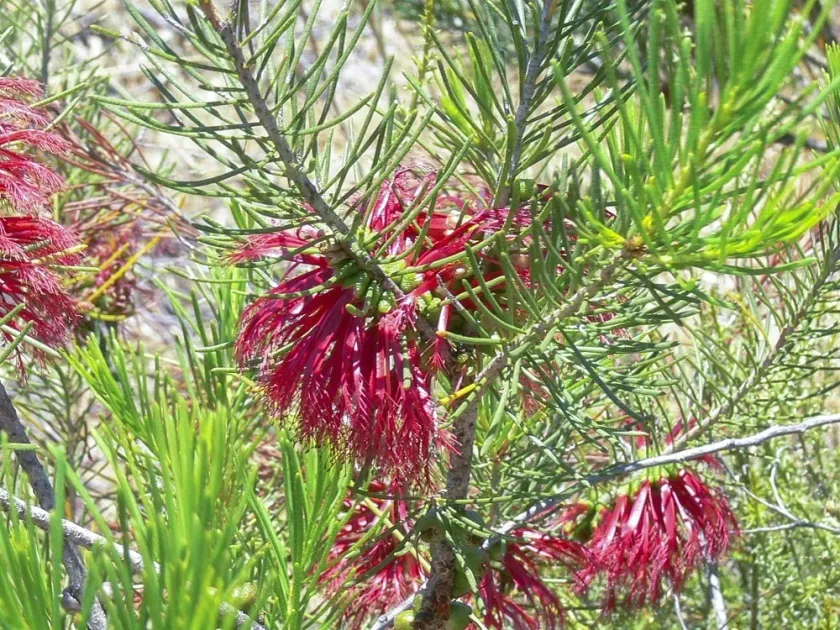
Description
Growing requirements
Melaleuca quadrifida is a resilient evergreen shrub belonging to the Myrtaceae family, native to the arid regions of Australia. Known for its distinct botanical structure, it serves as a prominent example of drought-tolerant flora that has evolved to thrive in nutrient-poor soils.
The plant features narrow, stiff leaves and characteristic bottlebrush-shaped inflorescences, which appear in vibrant shades of red. These flowers are highly valued in ornamental horticulture for their unique aesthetics and ability to attract pollinators, such as birds and beneficial insects.
Optimal growth conditions for Melaleuca quadrifida include well-drained sandy or loamy substrates. It exhibits remarkable hardiness against water scarcity, making it an excellent candidate for xeriscaping projects in regions with limited rainfall and high solar exposure.
Agrotechnical management primarily involves selecting a sunny site and ensuring that the soil is not prone to waterlogging, as the root system is sensitive to prolonged moisture. In cooler climates, this species is often grown as a container plant and moved indoors or into greenhouses during winter months.
Beyond its ornamental appeal, the species is investigated for its potential in producing essential oils and as a component in soil stabilization efforts. Its robust nature makes it a valuable asset for coastal and arid land rehabilitation programs.
Main diseases and pests
The most significant threat to Melaleuca quadrifida is fungal root infection, which occurs primarily in poorly drained soil environments.
Pests such as spider mites and scale insects may infest the foliage, particularly if the plant is grown in sheltered or poorly ventilated conditions.
Managing air circulation around the canopy is essential for preventing common fungal pathogens that thrive in high-humidity microclimates.
Integrated pest management strategies are recommended, utilizing organic and chemical controls specifically targeted at sucking insects during the early infestation stage.
Cultural practices such as corrective pruning and proper site selection significantly minimize the susceptibility of the shrubs to these biological threats.