
Rock tea tree
Leptospermum rupestre
Description
Growing requirements
Leptospermum rupestre, commonly known as the rock tea tree, is a low-growing evergreen shrub belonging to the Myrtaceae family. Native to the alpine regions of Tasmania, it has evolved to thrive in rocky, wind-swept environments.
The primary requirement for this species is exceptional soil drainage. It naturally grows in shallow, acidic, and gritty soils, making it highly susceptible to root rot if grown in heavy or poorly drained ground conditions.
In terms of climate, it prefers cool to moderate temperatures. While it enjoys full sun, it is best suited for climates where summers are not excessively hot or arid, as intense heat can cause significant foliage stress.
Agrotechnical management involves careful irrigation, ensuring the root ball remains moist but never waterlogged. Fertilization should be kept to a minimum, and any fertilizer used must be phosphorus-sensitive to prevent toxicity.
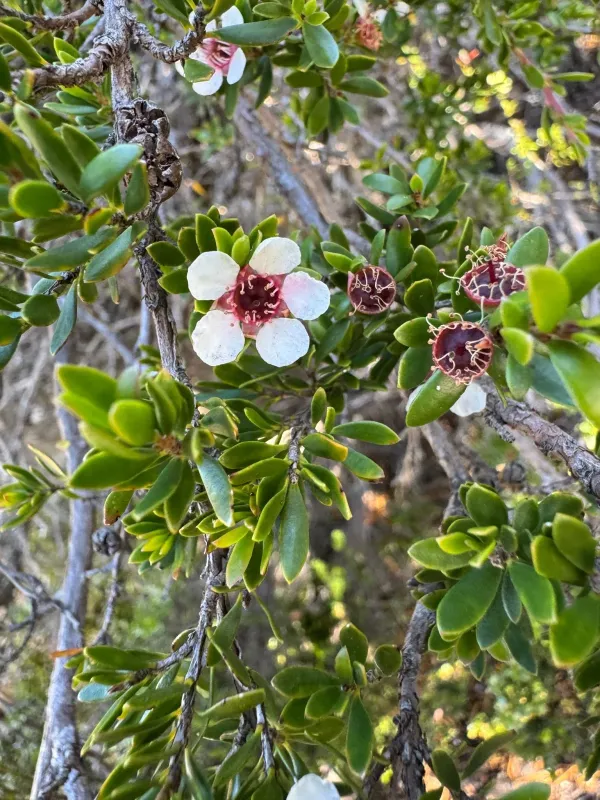
Its primary agricultural and ornamental use is in landscape design, specifically for rock gardens, low borders, or as a feature plant in container gardening. Its small, dense foliage and white flowers make it an excellent choice for aesthetic landscaping.
Main diseases and pests
Root rot caused by Oomycetes and various soil fungi represents the greatest biological threat. Prevention is focused on substrate choice and avoiding excess irrigation, especially during the dormant winter period.
Insect pests such as spider mites and scale insects are common in confined garden settings. They typically congregate on the undersides of leaves or in leaf axils, causing discoloration and plant stunting.
Integrated pest management should be employed, prioritizing the use of horticultural oils rather than harsh chemical pesticides. Regular monitoring is essential to detect infestations before they spread across the shrub.
Environmental stress can also predispose the plant to secondary infections. Ensuring adequate airflow between plants helps to reduce humidity levels and mitigates the risk of foliage diseases like powdery mildew.
Maintaining a balanced nutritional profile and consistent, but careful, watering schedule remains the most effective strategy for ensuring the long-term health and vitality of the rock tea tree.