
River tea tree
Leptospermum riparium
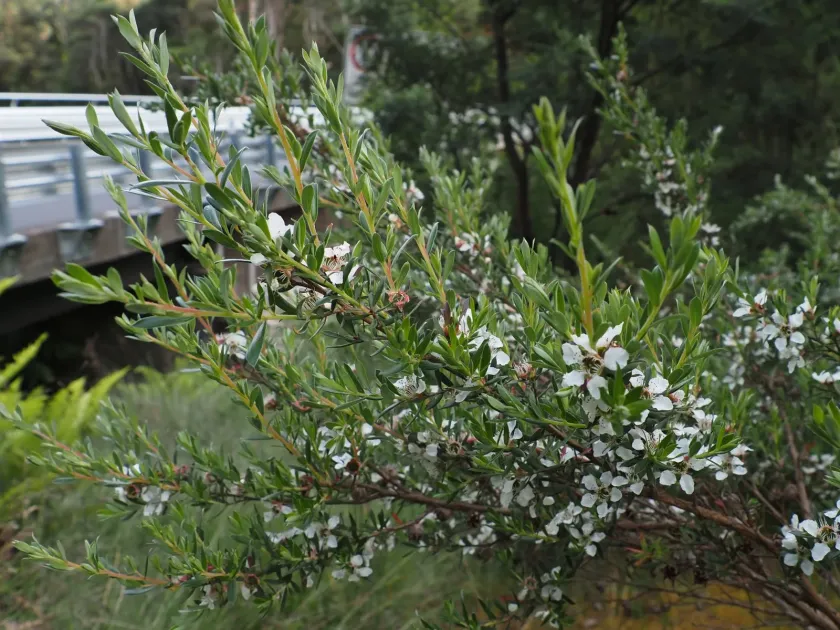
Description
Growing requirements
The river tea tree (Leptospermum riparium) is a woody shrub belonging to the Myrtaceae family. Originally native to specific riparian habitats, it has adapted to environments that require resilience against changing moisture levels and maritime exposure.
This crop thrives in well-draining, slightly acidic soils. The primary requirement for successful establishment is a soil profile that prevents waterlogging, as the species is highly susceptible to root decay when subjected to stagnant moisture conditions.
Sunlight exposure is a critical determinant of plant vigor. The species requires full sun to maintain its dense foliage and to stimulate the production of its characteristic floral displays, which are vital for both aesthetic and biological reasons.
The climate requirements of the river tea tree are characteristic of warm-temperate regions. While it can withstand some degree of wind and salt spray, it lacks significant frost tolerance, necessitating careful site selection or container management in cooler climates.
Cultural practices involve balanced fertilization and careful irrigation management. It is advised to avoid fertilizers with high phosphorus content, as plants in the Myrtaceae family have specialized root systems that may be sensitive to excessive nutrient accumulation.
Main diseases and pests
The river tea tree is primarily threatened by fungal pathogens such as Phytophthora, which target the root system in poorly drained soils. These pathogens can cause rapid decline and collapse if not addressed early through improved drainage management.
Insect pests including scale insects and mealybugs are frequently observed on this species. These pests cluster on stems and leaf axils, creating honeydew that often attracts secondary infestations and leads to reduced photosynthetic capacity.
Spider mites are common in environments with low humidity, causing stippling of the foliage. Infestations are typically managed by increasing environmental humidity and using targeted horticultural oils that are safe for the plant’s delicate leaf structures.
Integrated pest management protocols should emphasize the prevention of infestations through regular inspection of the lower canopy. Early detection allows for the application of organic or contact-based insecticides without harming beneficial predatory insects.
Maintenance pruning plays a major role in disease management. By removing dead or crowded branches, growers increase the airflow throughout the canopy, which significantly lowers the risk of fungal infections and creates a healthier microclimate for the plant.