
Leptospermum petraeum
Leptospermum petraeum
Description
Growing requirements
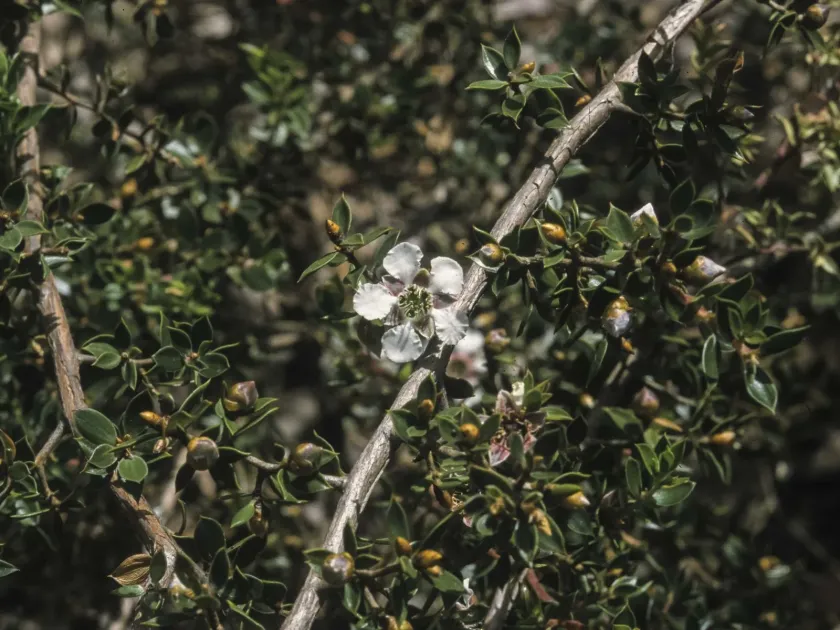
Leptospermum petraeum is an evergreen shrub belonging to the Myrtaceae family. Native to the rocky outcrops of Australia, this species is uniquely adapted to harsh, nutrient-poor, and well-drained environments.
Cultivation requires specific soil conditions, prioritizing high permeability. Sandy or rocky substrates are ideal, as the plant is highly susceptible to root decay caused by excessive moisture or waterlogging.
The plant thrives in full sun, which is necessary for vigorous growth and prolific flowering. It exhibits remarkable resilience to wind and dry conditions once the root system is well-established in its permanent location.
Temperature management is a key factor in temperate regions. While Leptospermum petraeum can tolerate mild cold, it is generally considered tender and requires protection or greenhouse cultivation during frost-prone months.
Nutrient requirements are modest; the plant is adapted to soils low in phosphorus. Fertilization programs must avoid standard high-phosphorus mixes, as these can cause chemical stress to the plant's sensitive root hair system.
Main diseases and pests
Root rot, particularly that caused by Phytophthora species, represents the most significant threat to the health of Leptospermum petraeum. Proper drainage is the primary defense against this pathogen.
Mealybugs are frequent pests that congregate in leaf axils and on young stems. They weaken the plant by extracting sap and can lead to the growth of sooty mold on the foliage surface.
Scale insects can also infest the stems, creating dense colonies that are difficult to eradicate. Early detection through regular visual inspection is key to preventing large-scale infestations.
Cultural control measures, such as providing adequate spacing and avoiding overhead irrigation, are highly effective in reducing the prevalence of fungal and bacterial infections.
When chemical treatments are necessary, it is vital to select insecticides that are non-phytotoxic to the sensitive Myrtaceae family, following the manufacturer’s application guidelines strictly.
Harvesting
The primary use of this culture is within the ornamental horticulture and floral industry. The foliage and flowers are highly prized for their aesthetic value and longevity in decorative arrangements.
Harvesting for floral use should be timed during the early morning hours. Proper pruning after the flowering season is essential to maintain the structural integrity of the plant and encourage future blooms.
For landscaping purposes, the shrub acts as a focal point in xeriscape gardens. Pruning should be light and selective, focusing on removing spent flower heads and any deadwood to ensure optimal airflow.
Proper harvesting tools must be cleaned and disinfected before and after use to prevent the transmission of pathogens between plants. This is a critical practice for maintaining long-term plant health.
Post-harvest care involves keeping the cut stems in a cool environment with clean water. The hardy nature of the foliage makes it an excellent choice for modern floral designs requiring durability.