
Woolly tea tree
Leptospermum lanigerum
Description
Growing requirements
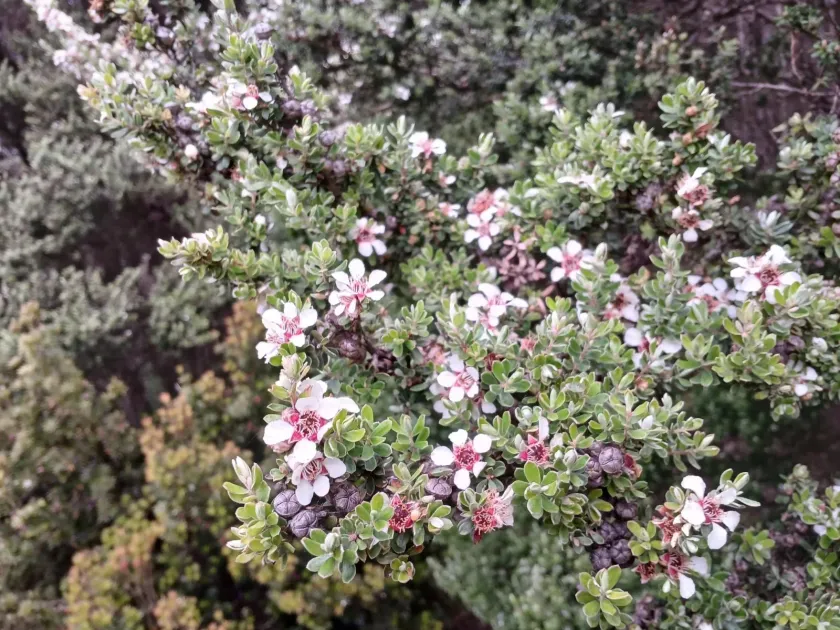
The Woolly tea tree (Leptospermum lanigerum) is a perennial evergreen shrub belonging to the Myrtaceae family. Native to Australia, it is well-regarded for its distinctive silvery-grey foliage, which is covered in fine, soft hairs giving it a woolly appearance.
This species thrives in well-lit environments and requires full sun exposure to maintain its compact growth habit and foliage coloration. The plant is adaptable to various soil types, provided they are well-drained and slightly acidic, mimicking its natural habitat along watercourses and wetlands.
Regarding climate, the plant performs best in mild, temperate zones. It is not fully frost-hardy and requires protection in regions where temperatures drop significantly below freezing. In colder climates, it is effectively grown in pots, allowing for indoor overwintering.
Agronomic practices for this culture emphasize consistent moisture levels while strictly avoiding waterlogged conditions. Fertilizer application should be targeted toward acid-loving plants, utilizing low-phosphorus formulations to prevent nutrient toxicity, common in the Myrtaceae family.
The primary utility of the Woolly tea tree is ornamental. Due to its dense foliage and attractive white blossoms, it is a popular choice for coastal landscaping, shrub borders, and as a screening plant in private and public gardens.
Main diseases and pests
Major threats to the health of the Woolly tea tree include root rot and fungal pathogens caused by over-irrigation or inadequate drainage. Proper site selection and careful monitoring of irrigation intervals are critical for plant survival.
Insect pests, specifically spider mites and scale insects, frequently pose a challenge, particularly in dry indoor environments. Implementing regular foliage inspections and using horticultural oils or soaps can mitigate these infestations effectively before they cause extensive damage.