
Kunzea baxteri
Kunzea baxteri (Klotzsch) Schauer
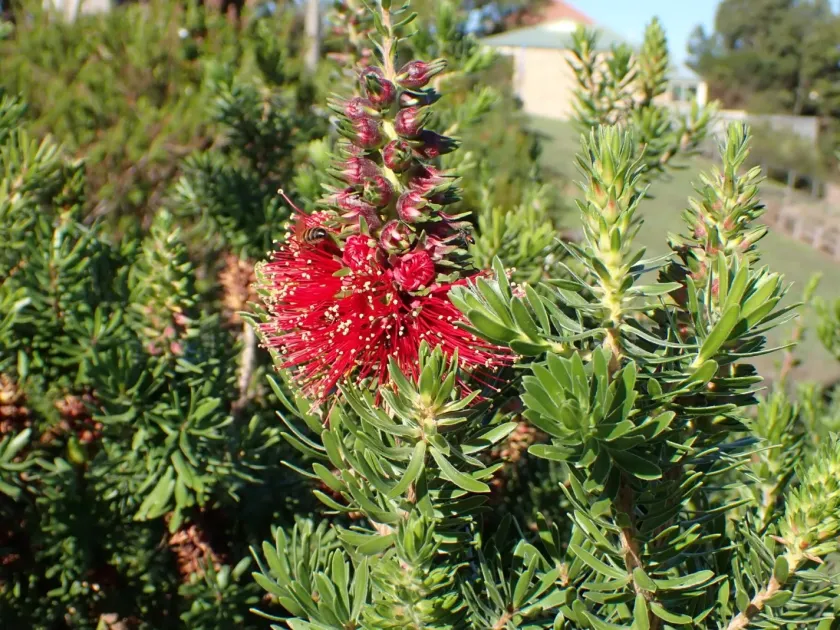
Description
Growing requirements
Kunzea baxteri, commonly known as Baxter's Kunzea, is an attractive evergreen shrub belonging to the Myrtaceae family. It is native to the southwest region of Western Australia, where it thrives in sandy, well-drained soils.
As a drought-tolerant species, it demands full sun exposure to flourish. Providing sufficient light is essential for maintaining its dense foliage and promoting the development of its signature brilliant red bottlebrush-like flowers.
The plant is highly sensitive to soil drainage. It requires a substrate that prevents water stagnation, as poor drainage is the primary cause of root failure in this species. Sandy or gravelly soils with a slightly acidic pH are ideal.
Temperature management is vital for the health of Kunzea baxteri. Being a frost-sensitive plant, it is best suited for outdoor cultivation only in Mediterranean climates. In cooler regions, it must be grown in containers and protected during winter.
Maintenance involves careful watering practices. It is crucial to allow the soil to dry out significantly between watering sessions to mimic the natural wetting and drying cycles of its native Australian habitat.
Harvesting
The primary economic use of Kunzea baxteri is in the ornamental horticulture and floriculture sectors. Its vibrant, nectar-rich flowers are highly valued in the floral industry for their exotic appearance and longevity.
Harvesting for floral arrangements should be performed when the flowers are fully open but not yet beginning to senesce. Proper post-harvest care, including clean water and temperature control, ensures that the blooms remain attractive for an extended period.
In landscaping, this plant serves as an excellent focal point. Its ability to tolerate pruning makes it a preferred choice for residential gardens seeking an Australian-native aesthetic and a low-maintenance, drought-resistant shrub.
Beyond aesthetics, the essential oils found in the foliage of the genus Kunzea are gaining attention in the perfume and therapeutic industries, where researchers are investigating the antimicrobial and aromatic properties of its extracts.
To ensure consistent quality, seasonal pruning is recommended. Removing spent flowers and thinning out inner branches encourages new growth and keeps the plant canopy dense, which is essential for healthy flower production in subsequent seasons.