
Red stopper
Eugenia rhombea
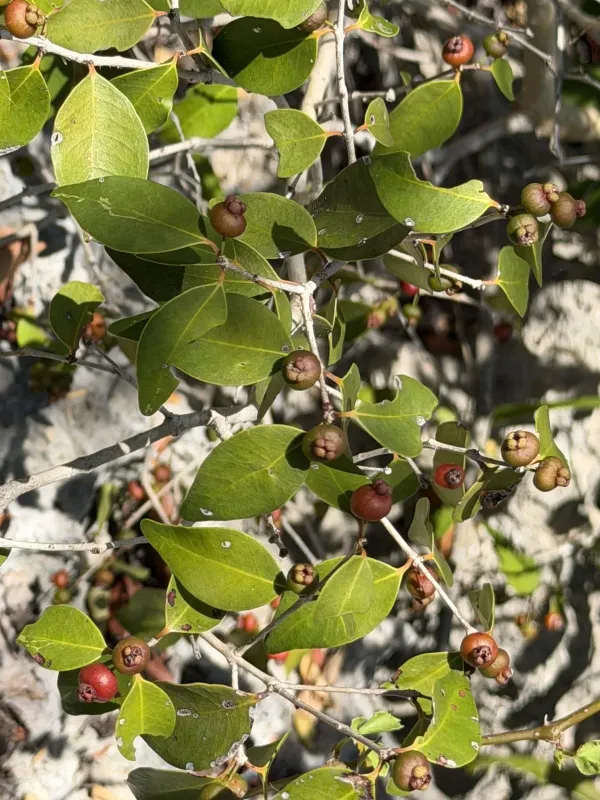
Description
Growing requirements
Red stopper (Eugenia rhombea) is a perennial evergreen plant belonging to the Myrtaceae family, native to the tropical regions of Florida, the Caribbean, and Central America.
The plant typically grows as a small tree or shrub, featuring glossy, leathery leaves and a dense crown, making it a valuable species for ecological restoration in its native range.
In terms of climate, Eugenia rhombea thrives in frost-free tropical environments where high humidity levels are maintained throughout the growing season.
The ideal soil substrate for this culture consists of well-drained sandy or limestone soils, as the root system is highly sensitive to waterlogging and soil acidity fluctuations.
Adequate sunlight is essential for optimal growth; while the plant can tolerate partial shade in its juvenile stage, mature specimens perform best under full sun exposure.
Main diseases and pests
The primary threats to Eugenia rhombea plantations include common tropical pests such as scale insects (Coccidae) and mealybugs that sap nutrients from the leaves.
Fungal infections can occur if the humidity remains excessively high for extended periods, potentially leading to leaf spotting and branch dieback symptoms.
Root rot caused by Phytophthora species is a significant concern in poorly drained soils, often resulting in rapid wilting and decline of the tree health.
Invasive weed competition near the base of young saplings can restrict growth; therefore, maintaining a clear mulched area is a recommended agronomic practice.
Climate change and extreme weather events, such as hurricanes, pose a physical risk to mature trees, necessitating the selection of sheltered planting locations.
Harvesting
The fruit of the Red stopper is a small, globose berry that changes color from orange-red to a deep, dark purple or black upon reaching full maturity.
Harvesting is labor-intensive as it involves manual picking of ripe berries during the peak fruiting season, which usually occurs in the late summer or autumn.
Due to the perishable nature of the fruits, they are primarily used for local culinary purposes, such as making fresh jams, jellies, and traditional regional beverages.
The wood of the tree is characterized by its hardness and durability, providing a sustainable source for small-scale timber uses, such as crafting tools or handicrafts.
- Requires consistent monitoring for pests like aphids or scale insects.
- Regular pruning helps maintain the desired shape and facilitates fruit access.
- Proper irrigation is crucial during early development stages.