
Eugenia myrtoides
Eugenia myrtoides
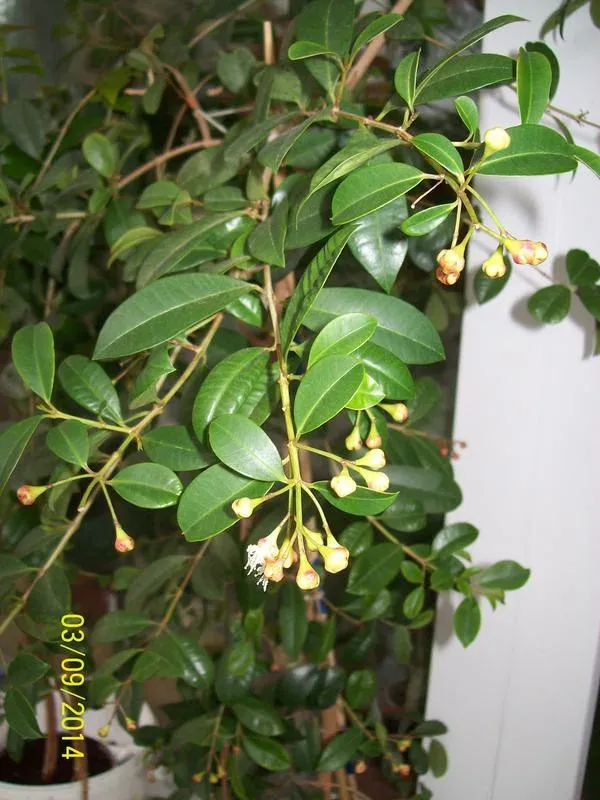
Description
Sowing dates
Eugenia myrtoides, a member of the Myrtaceae family, is propagated primarily through seeds or semi-hardwood cuttings. Seeds are recalcitrant and lose viability quickly, so they must be sown immediately after harvesting from the fruit.
The ideal time for sowing is during the spring season when the increase in light intensity supports germination. Seeds should be sown in a light, well-draining potting medium at a depth of approximately 1 to 2 centimeters.
A stable temperature range of 22–25 degrees Celsius is critical for uniform germination. The substrate must remain consistently moist but never waterlogged to prevent the seeds from decaying in the soil.
Seedlings usually emerge within 3 to 6 weeks. Once the plants reach the stage of having two or three pairs of true leaves, they should be carefully transplanted into individual pots to allow for adequate root development.
Vegetative propagation via cuttings is the preferred method for ensuring clonal fidelity. Cuttings are taken in summer, treated with rooting hormones, and kept in a high-humidity environment to encourage root initiation.
Growing requirements
This species thrives in tropical and subtropical conditions, requiring bright, filtered light. Direct, intense sunlight can scorch the foliage, while insufficient light leads to sparse growth and reduced flowering.
The plant requires a well-draining, nutrient-rich soil with a neutral to slightly acidic pH. Incorporating organic matter into the soil mix improves moisture retention without compromising the vital aeration of the roots.
Maintaining high relative humidity, ideally between 60% and 75%, is essential for the health of Eugenia myrtoides. Regular misting or the use of a humidifier is recommended for indoor cultivation.
Watering should be consistent but allow the surface of the soil to dry out slightly between sessions. Overwatering is the most common cause of root rot, so proper drainage is non-negotiable for long-term health.
Fertilization with a balanced, micronutrient-rich fertilizer should be conducted during the active growth period. Applying a liquid feed every two to three weeks ensures vigorous development and healthy foliage.
Yield
Eugenia myrtoides typically begins to bear fruit within 3 to 5 years, depending on the growing conditions and the maturity of the plant. Fruit production is highest when the plant receives optimal light.
The fruits are small, juicy berries prized for their pleasant flavor and potential health benefits. They are highly versatile and can be consumed fresh or used in culinary applications such as jams and jellies.
Harvesting is performed when the fruits reach full maturity, indicated by a deep, characteristic skin color. The delicate nature of the fruits means they have a short shelf life and are not suitable for long-distance transport.
Pruning is essential to maintain a productive, manageable canopy. By thinning out dense growth, gardeners improve light penetration to the interior branches, which stimulates the formation of more fruit-bearing shoots.
Commercially, the crop serves as a specialized fruit source, valued for its organoleptic properties. Its role in small-scale horticulture continues to grow due to the increasing interest in exotic, nutrient-dense berries.
Main diseases and pests
Common pests affecting Eugenia myrtoides include scale insects and mealybugs, which attach themselves to the stems and leaves. These pests weaken the plant by extracting phloem sap and promoting sooty mold growth.
Spider mites are a significant threat in environments with low humidity, especially in indoor settings. They cause fine webbing and stippling on the leaves, leading to chlorosis and premature leaf drop.
Fungal diseases, particularly leaf spots and root rots, are often the result of poor air circulation and excessive soil moisture. These conditions favor the proliferation of pathogenic fungi in the root zone.
Management involves using appropriate systemic insecticides and fungicides, combined with strict sanitary practices. Removing affected plant parts promptly prevents the spread of pathogens throughout the crop.
Regular monitoring of the foliage, particularly the undersides of the leaves, is the most effective preventative measure. Keeping the growing area clean and ensuring good airflow significantly reduces the risk of infestations.