
Eugenia koolauensis
Eugenia koolauensis
Description
Growing requirements
Eugenia koolauensis is a rare woody species belonging to the Myrtaceae family. Native to the Hawaiian Islands, specifically the Koolau and Waianae mountain ranges of Oahu, this plant is recognized as a critically endangered species.
The plant grows as an evergreen tree or large shrub in mesic forest environments. It thrives in well-drained volcanic soils that provide sufficient nutrient content while maintaining consistent moisture levels, reflecting its adaptation to mountain ecosystems.
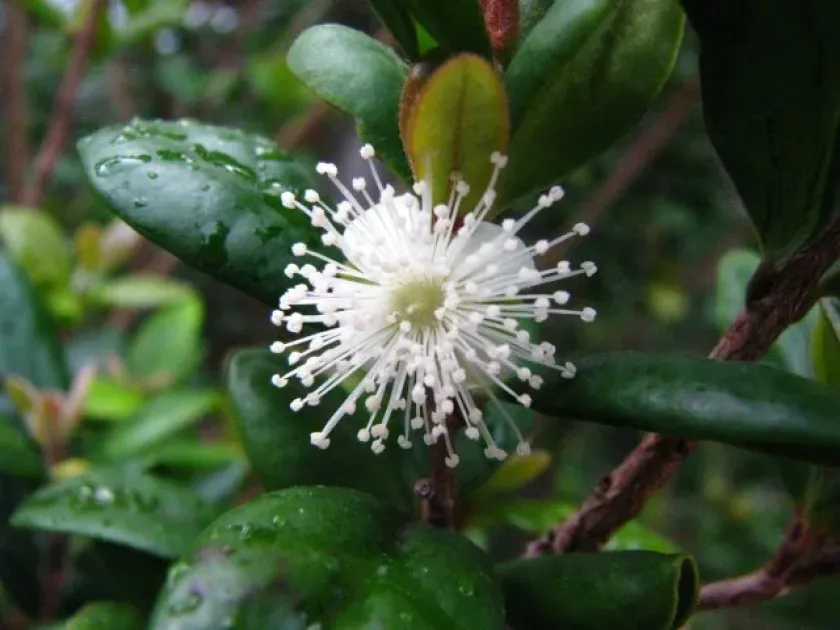
Botanically, it features thick, leathery leaves arranged in opposite pairs, which are typical characteristics of many Eugenia species. The flowers are small, usually white, with numerous stamens, contributing to the distinct aesthetic of the Myrtaceae family.
Requirements for cultivation include stable tropical temperatures and protection from high winds. Due to its status, formal agricultural production does not exist, and efforts are concentrated on botanical research and habitat restoration programs.
Propagation is generally slow, emphasizing the need for professional nursery care and sterile growing conditions to ensure that seedlings have the best chance of survival before being reintroduced into protected natural areas.
Main diseases and pests
The survival of Eugenia koolauensis is heavily impacted by invasive plant species like strawberry guava, which outcompete native flora for light and soil resources.
Feral pigs pose a direct physical threat by disturbing the forest floor, damaging the roots of adult trees, and destroying the saplings that represent the future of the population.
Environmental pathogens represent a significant risk, particularly those that target the vascular system of the tree in wet, high-humidity mountain climates.
Various scale insects and other sapsucking pests may inhabit the foliage, potentially leading to stunted growth or severe leaf loss if left untreated in a nursery setting.
Fragmented habitats make the species extremely sensitive to minor environmental changes, requiring ongoing monitoring and active exclusion of threats from restoration sites.