
Eugenia kanakana
Eugenia kanakana
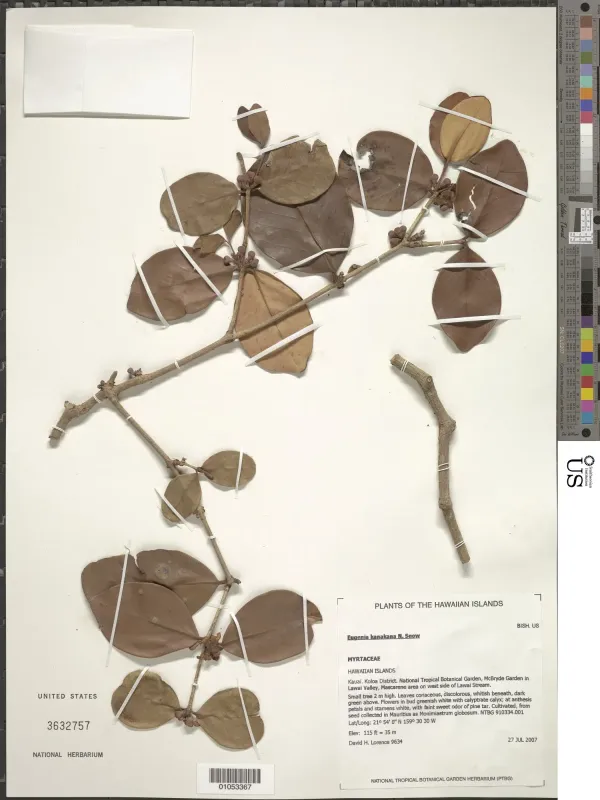
Description
Growing requirements
Eugenia kanakana is an evergreen woody plant belonging to the Myrtaceae family. This species is native to the Pacific Islands, with its natural range significantly centered on New Caledonia, where it thrives in specific humid forest habitats.
Botanically, the plant is characterized by its leathery, opposite leaves and small, fragrant white flowers typical of the genus. Its fruit is a succulent berry, which is locally harvested for consumption due to its distinct nutritional profile and pleasant culinary properties.
The plant requires a strictly tropical or subtropical climate to flourish, as it lacks cold hardiness. In temperate regions, successful cultivation is only possible within controlled environments like greenhouses or botanical conservatories where temperature is kept stable.
Regarding soil requirements, Eugenia kanakana favors fertile, well-draining substrates rich in organic matter. Consistent moisture management is critical; gardeners must ensure the soil remains moist without becoming waterlogged, as poor drainage is a common cause of root rot.
The primary use of this crop is fruit production for local culinary purposes, including fresh consumption and culinary processing. Additionally, its dense canopy makes it an attractive choice for landscaping and ornamental use in tropical garden settings.
Main diseases and pests
Common plant diseases for Eugenia kanakana include fungal infections, such as powdery mildew or various leaf spots, which are typically exacerbated by inadequate airflow and high humidity in confined growing spaces.
Key pests affecting this species include scale insects and spider mites. These pests thrive in indoor conditions, feeding on plant sap and potentially causing stunted growth or premature leaf drop if infestations are not managed.
Management strategies involve routine plant inspections and the application of horticultural oils or organic insecticidal soaps to keep pest populations below damaging thresholds.
Cultural control methods are essential for prevention, specifically focusing on maintaining optimal spacing between plants and implementing strict sanitary practices during pruning to remove infected tissues.
Ultimately, a successful management program integrates proper irrigation, balanced fertilization, and monitoring, ensuring that the tree remains vigorous enough to resist typical environmental stressors.