
Eugenia coronata
Eugenia coronata
Description
Growing requirements
Eugenia coronata is a distinctive evergreen shrub or small tree belonging to the Myrtaceae family. This species is native to the tropical regions of South America, thriving in warm and humid environments that support its vegetative vigor.
Successful cultivation requires well-draining, nutrient-rich soils with a slightly acidic to neutral pH level. The plant is highly sensitive to waterlogging, making proper drainage management an essential part of its agronomic protocol.
Climate preferences for Eugenia coronata involve constant warmth, as it lacks frost tolerance. In temperate regions, it is strictly an indoor or greenhouse plant, requiring high light intensity to maintain its compact and dense foliage structure.
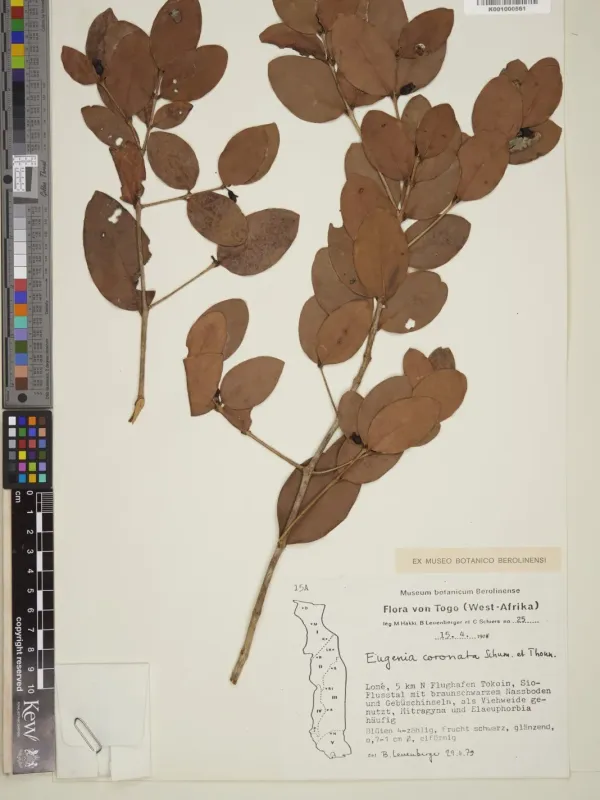
Botanically, the species is recognized by its glossy leaves and specific floral anatomy with a prominent crown-like calyx. These features contribute to its aesthetic value in tropical landscaping and botanical collections.
The economic utility of this crop spans from ornamental use to the consumption of its unique, antioxidant-rich fruits. These fruits are utilized in artisanal food production, including the manufacturing of local beverages and specialty preserves.
Main diseases and pests
Typical pests affecting this plant include sap-sucking insects such as scale insects and mealybugs. These pests congregate on tender shoots and leaf undersides, significantly weakening the plant if not controlled early.
Fungal pathogens represent the primary health threat, particularly root rot caused by poor soil aeration and humidity management. Symptoms often include leaf drop and discoloration, which can be fatal if the moisture levels are not corrected.
Integrated Pest Management (IPM) strategies are recommended to maintain the health of Eugenia coronata. This involves monitoring pest populations and using biological control agents alongside judicious horticultural practices.
Nutritional deficiencies often manifest as chlorosis, indicating an imbalance in soil minerals. Proper fertilization schedules, focusing on micronutrients like iron and magnesium, help prevent these common physiological disorders.
Maintaining air circulation around the canopy is critical to reducing the risk of powdery mildew and other foliar infections. Regular pruning helps achieve this by allowing adequate light and air to penetrate the interior branches of the tree.