
Redberry stopper
Eugenia confusa
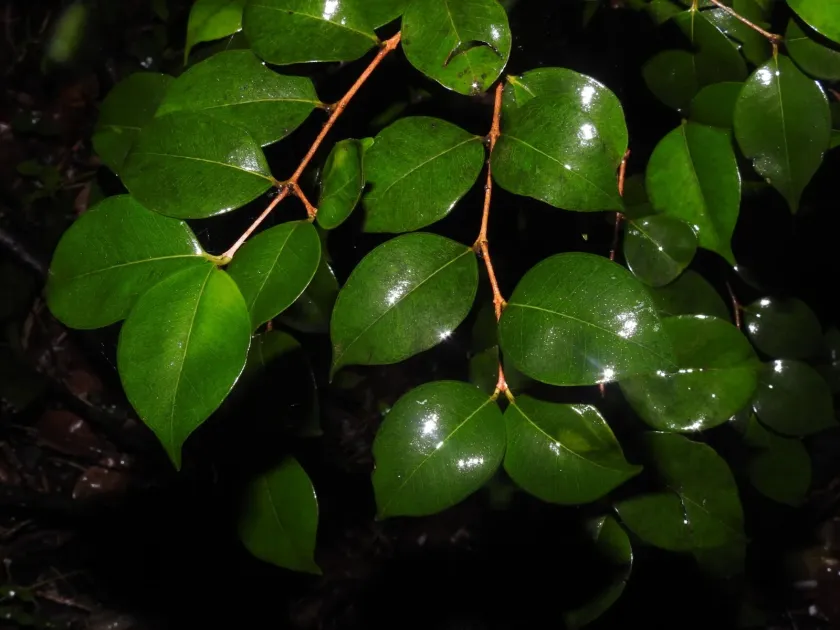
Description
Growing requirements
The Redberry stopper (Eugenia confusa) is a prominent member of the Myrtaceae family. It is a slow-growing evergreen tree that typically features a dense, rounded canopy and small, dark green, leathery leaves.
Native to the limestone forests of South Florida, the Bahamas, and the Caribbean, this species is well-adapted to alkaline soils. It is highly valued for its natural resistance to environmental stress within its endemic range.
Regarding climatic requirements, the plant thrives in tropical and subtropical zones. It is frost-sensitive, meaning it must be protected or kept in climate-controlled environments if temperatures drop below freezing.
Soil requirements focus on excellent drainage. While the species is tolerant of various substrates, it performs best in rocky, well-aerated soils where oxygen can reach the root zone without obstruction.
Agricultural techniques involve providing consistent irrigation during the establishment phase. Once the root system is robust, the plant demonstrates improved drought tolerance, though supplemental water is still beneficial during prolonged dry spells.
Main diseases and pests
Major threats to the health of the tree include scale insects and mealybugs, which can cause leaf drop and stunted growth if left unmanaged. Pruning infested branches can help control localized outbreaks.
Root rot, often caused by poor drainage or overwatering, remains a critical threat to this species. To mitigate this, ensure the planting site is elevated and that no water pooling occurs around the base of the trunk.
Harvesting
The primary use of Eugenia confusa is in ornamental landscaping. It is frequently planted as a specimen tree, a hedge, or a privacy screen due to its dense foliage and aesthetic, exfoliating reddish-brown bark.
The fruit, a small black berry, serves as an essential food source for local bird populations. Its role in supporting local wildlife makes it a preferred choice for ecologically conscious garden designs.