
Mottlecah
Eucalyptus macrocarpa Hook.
Description
Growing requirements
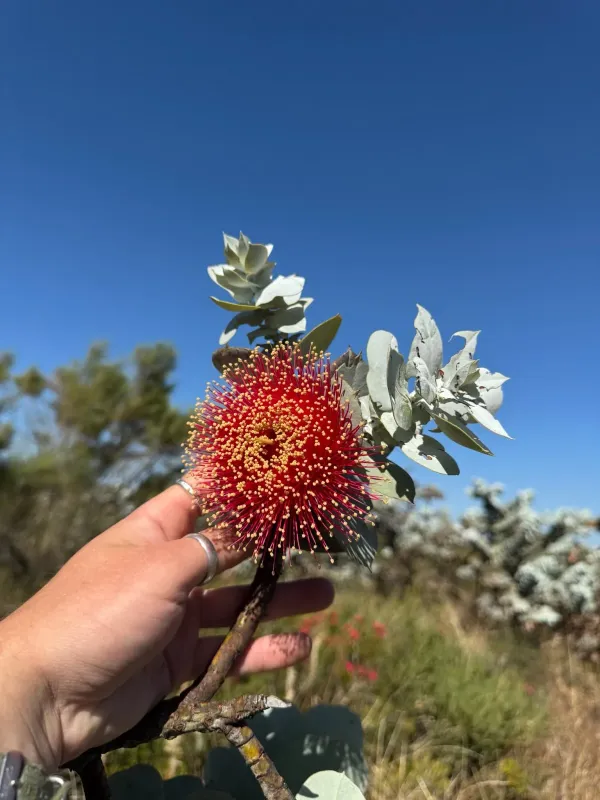
Eucalyptus macrocarpa, commonly known as Mottlecah, belongs to the Myrtaceae family and is recognized as one of the most stunning ornamental shrubs in the eucalyptus genus. Native to the sandy plains of Western Australia, it has evolved to thrive in nutrient-poor environments.
The plant features distinct glaucous, silvery-grey foliage covered with a waxy bloom, which serves as a natural mechanism to reduce water loss. Its massive, deep red flowers are an iconic feature that attracts various pollinators in its natural habitat.
To cultivate this species successfully, it requires full sun exposure and a warm, frost-free climate. Given its adaptation to arid conditions, the plant is highly sensitive to humidity and cold, making it suitable for Mediterranean-type climates or as a conservatory plant.
Soil drainage is the most critical factor for the survival of Eucalyptus macrocarpa. The ideal growing medium is a coarse, sandy, or stony soil that allows water to move freely, preventing any chance of waterlogging, which is fatal to the root system.
In terms of agricultural and commercial use, this species is highly valued in the nursery trade and for high-end floristry. Its unique foliage and long-lasting blossoms make it a sought-after cut flower component in floral design and large-scale architectural landscaping.
Main diseases and pests
Root rot, primarily caused by Phytophthora species, remains the most significant threat to the plant's longevity. Ensuring excellent drainage and avoiding overwatering is essential to keep the root zone healthy and resistant to fungal pathogens.
Pests such as scale insects and aphids may occasionally infest the young, tender foliage. These pests can be managed through biological controls or the application of horticultural oils, ensuring the waxy coating of the leaves is not compromised.
In indoor or greenhouse settings, spider mites can become an issue if the environment becomes too dry and stagnant. Maintaining good air circulation is a primary preventative measure against these microscopic pests.
Nutrient management is specialized for this species, as eucalyptus plants have proteoid roots that are highly sensitive to phosphorus. Fertilizer applications must be restricted to low-phosphorus blends specifically formulated for native Australian flora.
A proactive approach to plant health includes regular monitoring for signs of stress, such as leaf discoloration or wilt. By providing adequate sunlight and keeping the root system dry, growers can effectively mitigate the majority of common threats.