
Green mallee
Eucalyptus viridis
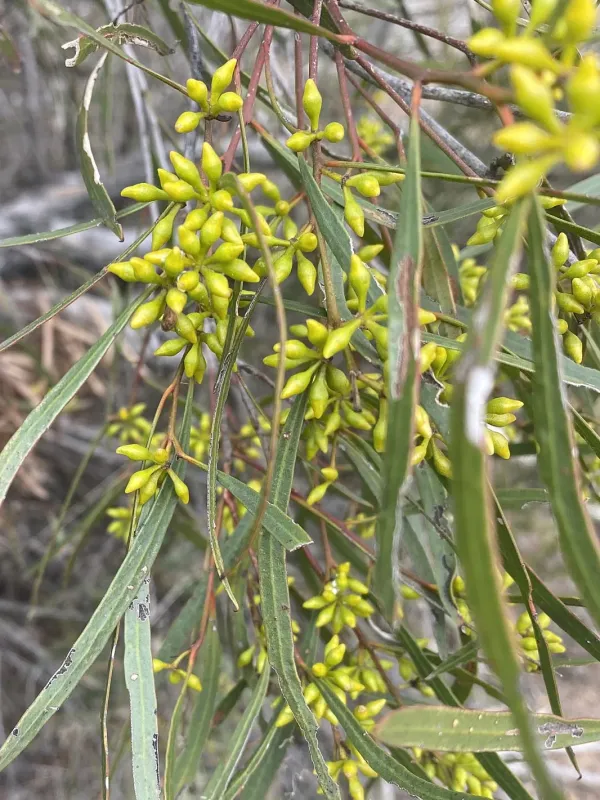
Description
Sowing dates
Sowing seeds of Eucalyptus viridis in nurseries is typically performed in late winter or early spring, ensuring seedlings are strong enough for transplantation. Seeds require stratification and a humid substrate to germinate successfully.
In the wild, reproduction occurs via seeds following forest fires, which clear the soil and trigger seed capsule release. In agro-technology, seeds are sown into a light, nutrient-rich substrate mixed with sand for optimal drainage.
Maintaining a temperature between 20 and 25 degrees Celsius and providing high-quality light is essential for early development. Pricking out is performed once the first pair of true leaves emerges.
Transplantation to the permanent site occurs once the root system has fully colonized the container volume and the risk of frost has passed.
Planting density depends on the specific objectives, with higher density favored for biomass production and lower density used for ornamental or shelterbelt applications.
Growing requirements
Eucalyptus viridis, a member of the Myrtaceae family, is native to Australia and naturally thrives in dry sclerophyll forests. The species prefers well-lit sites with direct sunlight exposure.
The crop is moderately demanding regarding soil conditions but performs best in sandy or well-drained loamy soils with a neutral or slightly acidic pH level.
Green mallee is highly drought-tolerant, making it a promising crop for moisture-deficient regions, although regular irrigation is necessary during the first two years of growth.
Waterlogging in the root zone is detrimental, necessitating the provision of adequate drainage or elevated planting beds in areas with high water tables.
The culture is sensitive to extreme cold, and cultivation in subtropical regions requires careful monitoring to prevent frost damage if temperatures drop below -7 degrees Celsius.
Yield
The productivity of Eucalyptus viridis is determined by annual biomass increment, which is highly valued industrially for its content of specific essential oils.
The leaves of this species contain a high concentration of cineole, serving as a vital raw material for pharmaceutical and cosmetic manufacturing. Harvesting occurs based on foliage maturity.
The wood of green mallee is known for its high density, durability, and resistance to decay, making it suitable for construction and high-quality woodworking.
Under intensive management systems, the yield of essential oil per hectare can reach significant volumes depending on tree age and irrigation availability.
Regular coppicing (pruning) stimulates the growth of new shoots, allowing for an annual, stable harvest of vegetative mass without the need to remove the entire tree.
Main diseases and pests
Primary threats to eucalyptus stands include root system fungal diseases, which often occur due to soil saturation and poor air circulation.
Pests such as lerps, leaf beetles, and weevils can cause significant damage to young foliage, effectively slowing down tree growth rates.
Powdery mildew often affects seedlings in high-humidity nursery environments with poor ventilation, necessitating preventative fungicide treatments.
To prevent the spread of infections, it is necessary to maintain adequate spacing between young plants and prune any dry or damaged branches promptly.
Regular phytosanitary monitoring of the plantation allows for the early detection of infection hotspots, minimizing losses through integrated biological control methods.
Harvesting
Harvesting leaves for essential oil production is conducted during the period of maximum active compound concentration, typically in the second half of the growing season.
For timber harvesting, Eucalyptus viridis is typically felled at an age of 15 to 25 years, once the trunk reaches the diameter and density required for industrial use.
The use of specialized mechanical pruning equipment allows for efficient biomass harvesting, reducing the overall production cost of the raw material.
Collected foliage must be sent for processing immediately to prevent the evaporation of volatile oils and the degradation of bioactive components.
Following harvest, the plantation demonstrates rapid vegetative recovery from dormant buds, allowing the same site to remain productive for many decades.