
Eucalyptus urograndis
Eucalyptus urograndis
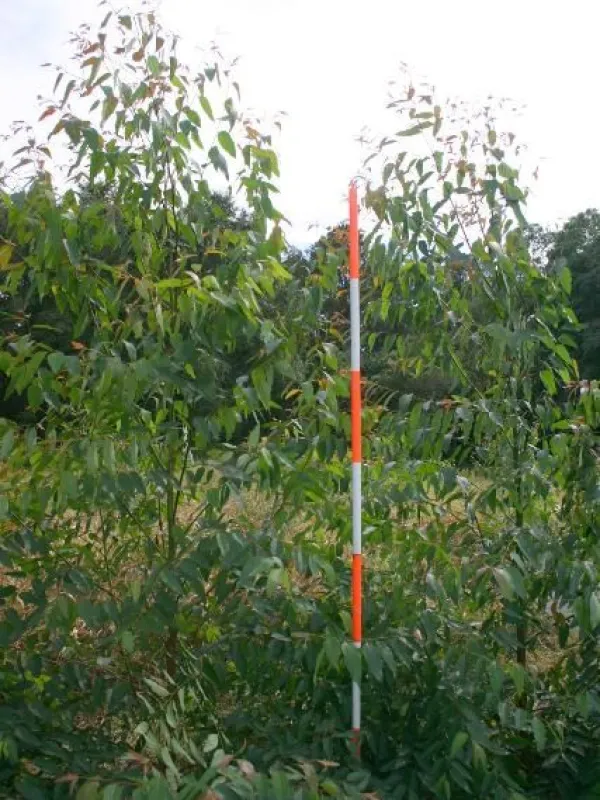
Description
Sowing dates
Eucalyptus urograndis is a highly productive hybrid created by crossing Eucalyptus urophylla and Eucalyptus grandis. It belongs to the Myrtaceae family and is widely cultivated in tropical and subtropical regions for industrial purposes.
In modern silviculture, this hybrid is primarily propagated through vegetative cloning. This process ensures genetic uniformity across large plantations, allowing for predictable growth rates and high-quality timber output per hectare.
Seedlings are typically planted at the onset of the rainy season to ensure optimal moisture availability for establishment. The planting density ranges from 1,100 to 1,600 trees per hectare, depending on the management objectives and site conditions.
Soil preparation involves deep ripping to loosen compacted earth, facilitating root penetration and expansion. Controlling weeds during the first two years is critical to reduce competition for nutrients and water, which ensures rapid early growth.
Fertilization regimes are customized based on soil nutrient profiles, typically focusing on nitrogen and phosphorus application. Regular leaf and soil analysis allow foresters to adjust nutrient inputs for maximum biomass production throughout the rotation cycle.
Growing requirements
Eucalyptus urograndis requires a tropical or subtropical climate with annual rainfall exceeding 1,200 mm for peak productivity. The hybrid is frost-sensitive and thrives best in warm regions without extreme seasonal cold, which would hinder its rapid growth.
The ideal soil conditions include deep, well-drained, acidic to slightly acidic soils. Avoiding waterlogged or poorly drained sites is essential, as excess moisture in the root zone can lead to severe fungal issues and stunted growth.
Temperature range of 18 to 25 degrees Celsius is optimal for metabolic activity. While the species is somewhat drought-tolerant, consistent moisture is necessary to maintain the high-speed growth potential that makes it a preferred forestry crop.
High light intensity is crucial for the development of straight stems and a healthy canopy. As a shade-intolerant species, it requires careful thinning in high-density plantations to ensure all individuals receive sufficient sunlight for photosynthesis.
In regions with distinct dry seasons, supplemental irrigation may be utilized in intensive plantations. Maintaining stable environmental conditions significantly increases the total harvestable timber volume at the end of the rotation period.
Yield
The primary advantage of Eucalyptus urograndis is its exceptional growth rate. Under favorable conditions, industrial plantations can achieve an annual wood increment of 30 to 50 cubic meters per hectare, setting it apart from slower-growing native species.
The rotation cycle for harvesting is short, typically ranging from 6 to 8 years. This rapid turnaround time makes the species an ideal candidate for commercial pulp and paper production, providing a reliable and steady supply of fiber.
The wood produced by this hybrid is known for its excellent fiber length and uniform quality, which is highly sought after by the paper manufacturing industry. It is also used in construction and furniture making after appropriate processing.
High biomass production also makes this eucalyptus an excellent source for bioenergy. Utilizing logging residues for energy generation helps close the loop in sustainable plantation management, increasing the overall economic efficiency.
Continuous breeding and selection efforts have led to second and third-generation clones with superior yields. As plantation technology advances, the volume of high-quality wood harvested per hectare continues to improve significantly.
Main diseases and pests
Fungal diseases, including leaf spots and rust, are the most significant threats to Eucalyptus urograndis plantations. High humidity combined with poor airflow between trees creates an ideal environment for these pathogens to thrive.
Various insect pests, particularly leaf-eating beetles and weevils, can cause significant defoliation. Damage to the leaf canopy directly affects the tree’s photosynthetic capacity, leading to measurable losses in timber volume.
Root-knot nematodes can also affect plantation health, particularly in replanted areas. Integrated pest management strategies, including the selection of resistant clones, are employed to minimize the impact of these microscopic organisms.
Ongoing research focuses on selecting genotypes with robust natural resistance to locally endemic diseases. This genetic approach reduces the reliance on chemical control methods and supports more sustainable forestry practices.
- Regular health monitoring through aerial and ground-based inspections.
- Sanitary removal of infected trees to prevent large-scale spread.
- Strategic planting density to ensure proper canopy aeration.
Harvesting
Harvesting is performed using mechanical harvesters that automate the felling and cross-cutting processes. This technology reduces labor requirements and optimizes wood recovery, ensuring that the maximum possible volume reaches the processing plants.
One of the unique features of this hybrid is its ability to coppice. After the primary harvest, the stumps regenerate new shoots, allowing for at least one or two subsequent harvests without the need for replanting, which cuts costs.
Logistics and transport planning are vital for harvest success. To maintain high wood quality and prevent degradation, harvested logs should be transported to mills shortly after being felled to ensure freshness and structural integrity.
Harvest operations must follow environmental guidelines to protect soil integrity and water resources. After logging is complete, the site is managed to restore organic matter and prepare for the next phase of growth.
Harvest timing is determined by analyzing individual tree volume and current market demand. Effective harvest planning allows for a continuous supply chain, supporting the economic viability of industrial forestry operations.