
Rodway's Eucalyptus
Eucalyptus rodwayi
Description
Growing requirements
Eucalyptus rodwayi is an evergreen tree belonging to the Myrtaceae family. Known commonly as a type of swamp gum, it is highly valued for its ability to thrive in wet, poorly drained soils where other Eucalyptus species would fail to establish.
The species is native to Tasmania, Australia. It is geographically restricted to cold, poorly drained sites, including valley floors and margins of swamps. This ecological niche makes it an important subject for cold-climate forestry and land reclamation projects.
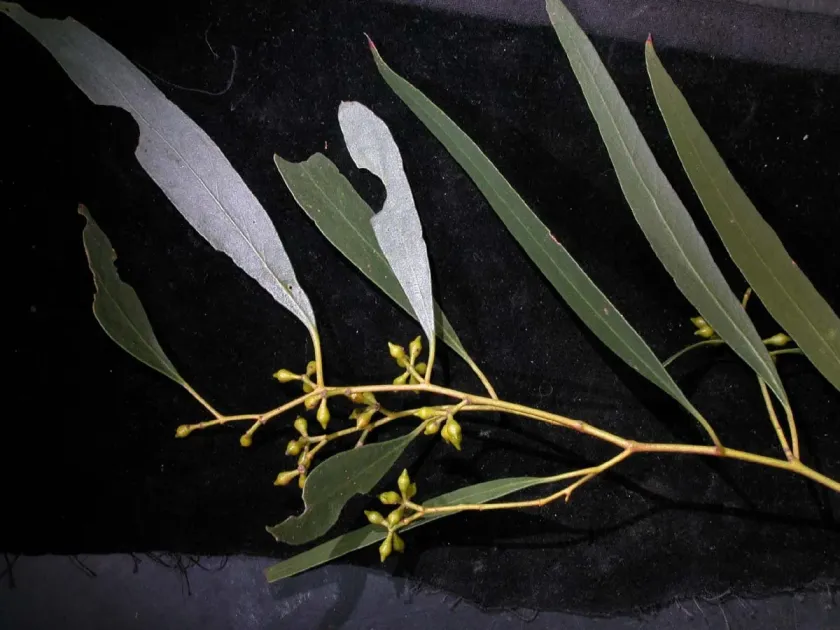
Botanically, the tree features long, slender, lance-shaped leaves that contain aromatic oils. It typically reaches heights of 15 to 20 meters, displaying a straight trunk and a relatively dense canopy compared to other members of its genus.
In terms of agricultural requirements, this species favors cool-temperate climates. It is highly frost-tolerant, which sets it apart from many Australian natives. It requires consistently moist, even waterlogged soils to reach its full growth potential.
The economic utility of Eucalyptus rodwayi includes the production of high-quality timber for local industries, biomass production for renewable energy, and the extraction of essential oils for medical and industrial applications.
Main diseases and pests
The primary pests affecting this species are leaf-eating beetles, which can cause significant defoliation during the peak spring and summer months. Systematic monitoring and timely intervention are necessary to maintain healthy growth rates.
Fungal infections, particularly leaf spot diseases, can occur if the local humidity remains high for extended periods without adequate air circulation. Pruning lower branches can improve airflow and reduce infection risks.
Root rot, often caused by water-borne fungi like Phytophthora, is a significant threat in poorly managed plantations. Ensuring the health of the drainage system is essential, despite the species' preference for wet soil.
Young saplings are susceptible to browsing by herbivores, including wild mammals that may strip the bark or consume terminal buds. Fencing and physical protection for the first three to five years are standard practices.
Nutrient deficiencies, particularly in nitrogen or phosphorus, can manifest in chlorosis of the leaves. Soil testing and the application of balanced slow-release fertilizers during the planting phase support strong establishment.