
Eucalyptus redunca
Eucalyptus redunca
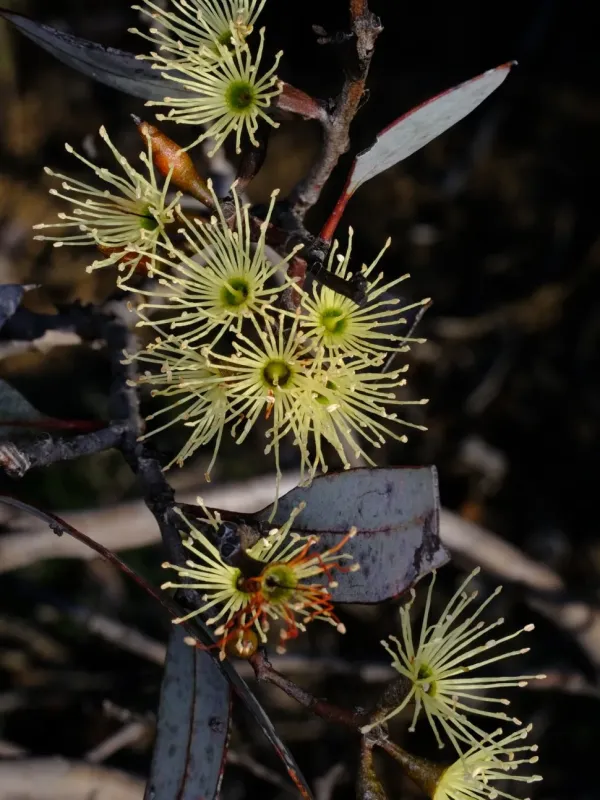
Description
Growing requirements
Eucalyptus redunca, commonly known as the black marlock, is a tree species belonging to the Myrtaceae family. It is native to the wheatbelt regions of Western Australia, where it has adapted to specific Mediterranean climatic conditions.
The species is renowned for its resilience, thriving in areas with low annual rainfall and long, hot summers. Its ability to extract moisture from deep soil layers makes it a robust candidate for reforestation in arid landscapes.
Optimal growth is achieved on well-drained soils, often characterized by heavy clays or loamy textures. The plant requires significant space for its canopy to develop, which is a critical consideration for commercial plantation design.
In terms of silviculture, proper site preparation involves deep ripping the soil to facilitate root penetration. Once established, the species is remarkably low-maintenance and can withstand various environmental stresses that would hinder other tree varieties.
Economically, the timber of Eucalyptus redunca is highly valued for its hardness, density, and durability. Beyond its wood products, the tree plays a vital role in ecological restoration by stabilizing soils and preventing erosion in degraded environments.
Main diseases and pests
The primary biological threat to Eucalyptus redunca is infection by soil-borne pathogens, particularly those affecting the root system in poorly drained areas. Maintaining soil health is essential to prevent these outbreaks.
Pests such as wood-boring beetles can affect the trunk integrity of mature trees, leading to economic losses in timber production. Integrated pest management strategies are recommended to keep populations below damaging thresholds.
Fire risk remains the most significant threat to large-scale stands, especially during extreme heat events. Implementing comprehensive fire break strategies is standard practice for managing eucalyptus forests.
Nutrient deficiency can lead to stunted growth and yellowing of the foliage, which is often rectified through site-specific fertilization based on soil testing. However, the species is generally well-adapted to naturally occurring soil profiles.
Competition from invasive understory weeds can suppress growth in younger stands. Regular weeding during the initial establishment phase ensures that the saplings receive the required nutrients and water.