
Ghost gum
Eucalyptus papuana
Description
Growing requirements
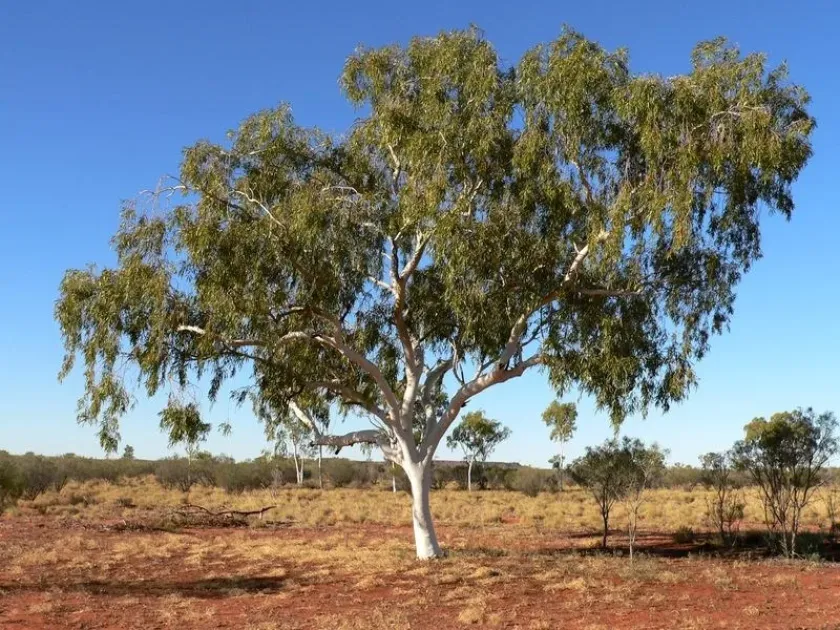
The Ghost Gum (Eucalyptus papuana) is a prominent member of the Myrtaceae family. It is recognized for its striking, smooth, white-to-cream bark that distinguishes it from many other eucalyptus species in its natural habitat.
Native to Northern Australia and Papua New Guinea, this species thrives in tropical climates characterized by warm temperatures and distinct seasonal rainfall. It has adapted well to the varied, often nutrient-poor soils of its indigenous regions.
Successful cultivation requires well-drained soils and full sun exposure. While the tree is drought-tolerant once established, young saplings require consistent moisture to develop a deep and resilient root system before facing harsher conditions.
The tree is primarily grown for its timber, which is dense and durable. In the forestry sector, it is valued for its versatility in construction, furniture manufacturing, and as a raw material for decorative wood products due to its attractive grain.
Given its fast-growing nature, the species is often utilized in reforestation projects. However, proper site selection and spacing are critical to ensure maximum yield and prevent resource competition among individual trees in a plantation.
Main diseases and pests
Ghost Gums are susceptible to various fungal pathogens that affect the foliage, especially in nurseries or plantations with high humidity and poor air circulation. Early detection of leaf spot is vital to prevent defoliation.
Pests such as lerps, scale insects, and wood-boring beetles can cause significant damage. These pests weaken the tree, making it vulnerable to secondary infections by bacteria or wood-rotting fungi during the growth stages.
Termite infestation is a specific risk in warmer climates, where these insects can target the base of the trunk. Integrated pest management strategies, including site monitoring and biological controls, are recommended for large-scale forestry.
Environmental stress, such as waterlogging or extreme temperature fluctuations, can reduce the tree's natural resistance to pests. Ensuring optimal drainage and site preparation is the first line of defense against these biological threats.
Regular maintenance, including the pruning of damaged or infected branches, helps maintain tree vigor. Keeping the base of the tree clear of debris also discourages pest colonization and creates a healthier growing environment.