
Blue Mountains Ash
Eucalyptus oreades
Description
Growing requirements
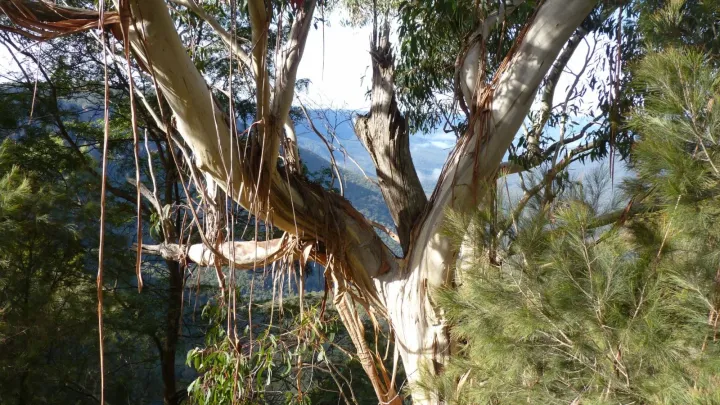
Blue Mountains Ash (Eucalyptus oreades) belongs to the Myrtaceae family. It is a tall, fast-growing evergreen tree that typically features a straight trunk with bark that sheds in long ribbons, contributing to its distinct botanical profile in native mountain forests.
Originating from the eastern regions of Australia, this species thrives in elevated landscapes. It exhibits a moderate level of cold tolerance compared to other eucalypts, allowing it to adapt to cool, temperate climates where rainfall is consistent throughout the year.
Successful cultivation requires deep, well-draining soils. The species is highly sensitive to waterlogged conditions, which can lead to root system decay. Therefore, site selection often favors sloping terrains that facilitate natural soil drainage and aeration.
The tree is a light-demanding species. Adequate sunlight is essential for optimal growth rates and the development of high-quality timber. Shaded environments inhibit growth, leading to poor canopy development and increased susceptibility to environmental stress.
Agricultural management involves monitoring soil nutrient levels and pH, as this species prefers slightly acidic conditions. Implementation of proper spacing between individual trees is a critical agronomical practice to ensure competition-free access to nutrients and light.
Main diseases and pests
Pests such as leaf-eating beetles and psyllids represent significant threats to young plantations. Monitoring for early signs of infestation is crucial, as severe defoliation can drastically reduce the tree's growth rate and overall commercial value.
Fungal pathogens associated with soil-borne diseases pose a risk, particularly when site drainage is inadequate. Implementing strict hygiene practices and ensuring optimal soil conditions are the best defenses against these destructive pathogens.
Climatic stressors, including prolonged droughts, can weaken the trees and make them susceptible to secondary infections. Maintaining forest vigor through appropriate silvicultural practices is essential for building natural resistance against these threats.
Wind damage is a concern for mature trees, especially in exposed sites. Strategic plantation design and thinning can help balance wind resistance and growth, preventing structural failures during heavy weather events.
Biosecurity measures are recommended when introducing the species to new regions to prevent the spread of host-specific pests. Integrated pest management strategies are often used to balance chemical and biological controls to protect the crop.
Harvesting
The primary use of Eucalyptus oreades is for timber production. Its wood is highly valued for its density, strength, and durability, making it an excellent material for construction, heavy-duty flooring, and high-quality cabinet making.
Beyond construction, this species is utilized by the pulp and paper industry. Its rapid biomass accumulation makes it an economically viable choice for industrial forestry plantations where short-rotation harvest cycles are practiced.
Harvesting usually occurs at maturity, which can range from 20 to 30 years. Modern mechanical harvesting methods are employed to efficiently extract and process logs while maintaining the structural integrity of the timber.
Post-harvest management involves proper seasoning of the wood. Since eucalyptus timber can be prone to checking if dried too rapidly, controlled kiln drying is often necessary to achieve the moisture content required for commercial export markets.
In addition to timber, the species is sometimes planted for landscape management. Its high transpiration rates assist in land reclamation, particularly in reducing the water table in areas prone to excess moisture and environmental degradation.