
Shining peppermint
Eucalyptus nitida
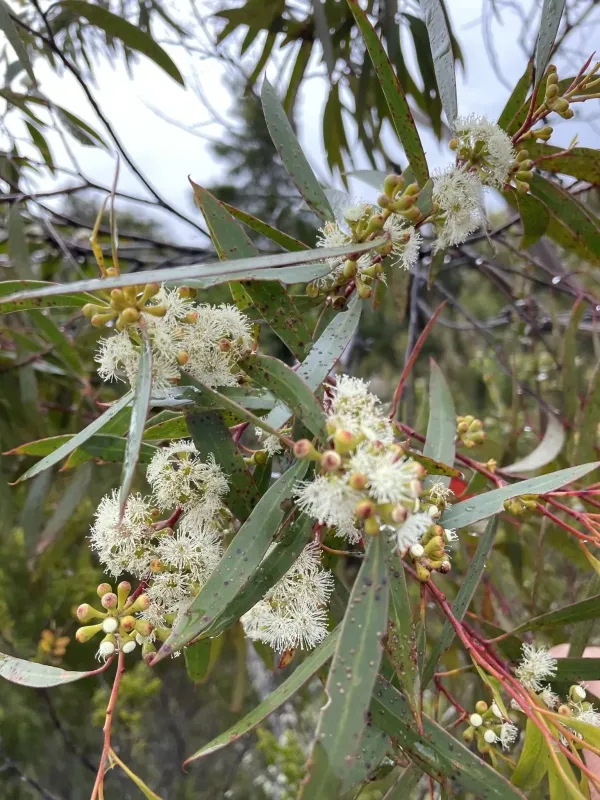
Description
Growing requirements
Eucalyptus nitida, commonly known as the shining peppermint, is a fast-growing tree belonging to the Myrtaceae family. It is characterized by its glossy green foliage and smooth bark, which peels away to reveal colorful, fresh layers underneath.
Native to Tasmania, this species thrives in cool, temperate climates. It is well-adapted to coastal conditions, demonstrating a remarkable resilience against strong winds and moisture-rich environments that would challenge other tree species.
Regarding soil requirements, this culture prefers deep, well-drained loamy soils. It is sensitive to waterlogged conditions, which can lead to root rot and stunted development. Proper site selection and land preparation are essential for maximizing growth rates.
The plant requires moderate temperatures and consistent rainfall to maintain its vigorous growth. While it is more frost-tolerant than many other eucalypts, seedlings require protection during the first few years to ensure they establish a strong, resilient foundation.
Agronomic practices include regular monitoring of soil nutrient levels, especially nitrogen and phosphorus, to support the rapid biomass production. Effective weed control in the initial establishment phase is crucial to prevent resource competition for young trees.
Harvesting
The primary economic use of Eucalyptus nitida is in the forestry industry. It is highly valued for its timber, which is durable and suitable for various construction projects, high-quality furniture, and flooring applications due to its attractive grain.
This species is also extensively utilized by the pulp and paper industry. Its rapid growth and consistent fiber quality make it a staple crop in short-rotation forestry programs designed to supply large quantities of raw material to paper mills.
The leaves of the shining peppermint are a rich source of essential oils. These oils are extracted for use in pharmacological products, such as decongestants and antiseptic creams, as well as in the fragrance and cosmetic industries for their soothing properties.
In landscape architecture, the tree is favored for its aesthetic appeal and ability to provide dense screens or windbreaks. Its pleasant fragrance also contributes to the restorative environment of parks and large-scale botanical gardens.
Harvesting methods depend on the specific end-use. For industrial fiber, plantations are often managed with clear-felling cycles, whereas selective harvesting might be employed when the goal is to produce high-value timber for architectural purposes.