
Silver-leaved ironbark
Eucalyptus melanophloia
Description
Growing requirements
The Silver-leaved ironbark (Eucalyptus melanophloia) is a distinctive species within the Myrtaceae family, native to the diverse landscapes of Eastern Australia. It is highly valued for its resilience in harsh environments.
This species thrives in sub-tropical and tropical climates, showing remarkable tolerance to extreme heat and prolonged droughts. It is an ideal candidate for reforestation projects in arid regions.
Regarding soil, the tree adapts well to various textures, preferring well-drained loams or stony soils. It performs poorly in waterlogged conditions, which can lead to rapid root decay.
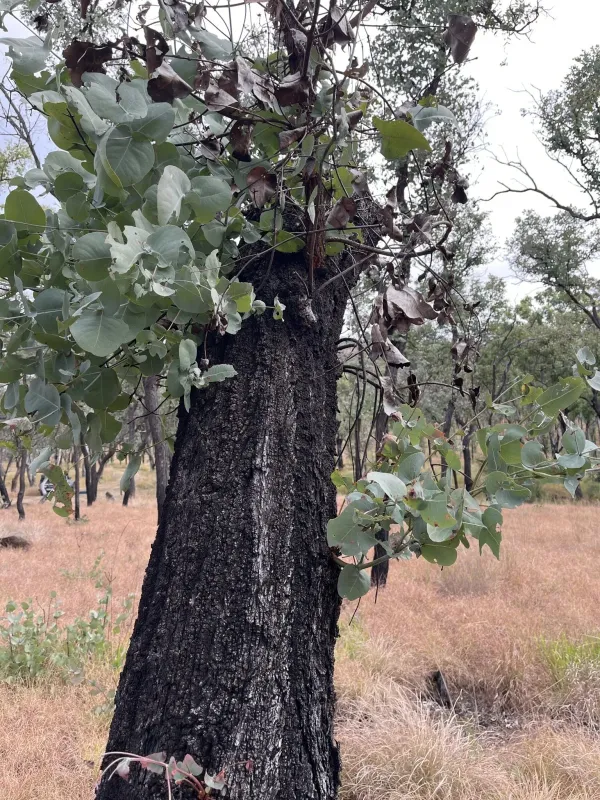
Botanically, it is characterized by its thick, deeply furrowed, dark-grey to black bark. The foliage is glaucous (bluish-grey), adding to its aesthetic appeal in landscape design and forestry.
Its primary economic use is the production of durable hardwood, which is exceptionally resistant to termites and rot, making it highly suitable for outdoor construction and fencing.
Main diseases and pests
The Silver-leaved ironbark is susceptible to various defoliating insects, including beetles and larvae that can significantly impact the health of saplings.
Fungal pathogens represent a major threat, particularly in nurseries where humidity levels are high, leading to damping-off disease in very young plants.
Mistletoe infestation is common in mature trees, acting as a parasite that drains nutrients and water, ultimately weakening the canopy over many years.
Stem-boring insects present a challenge to timber quality by creating galleries in the wood, which degrades the economic value of the harvested logs.
Effective management strategies should focus on maintaining adequate space between trees to ensure airflow and reduce the likelihood of pest outbreaks or fungal spreading.