
Eucalyptus kruseana
Eucalyptus kruseana
Description
Growing requirements
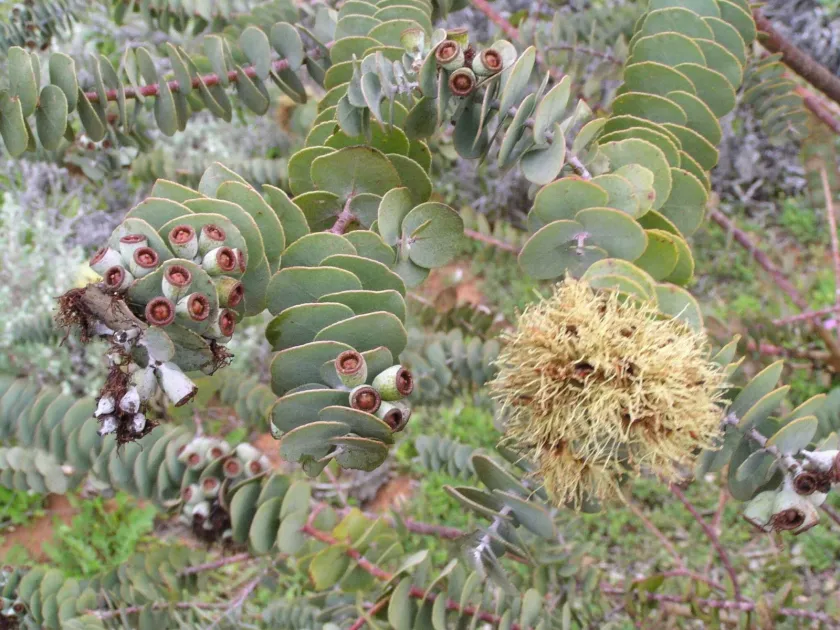
Eucalyptus kruseana, commonly known as Kruse's mallee, is a distinctive woody shrub belonging to the Myrtaceae family. It is endemic to the arid regions of Western Australia, where it thrives in rocky or sandy substrates under harsh environmental conditions.
The botanical structure of the plant is compact, typically growing as a mallee, which means it develops multiple stems from a lignotuber. Its aesthetic appeal lies in its juvenile-like foliage, characterized by rounded, silvery-blue leaves that are covered in a fine waxy bloom.
The cultivation requirements are centered around excellent drainage. The plant is highly drought-tolerant once established but susceptible to root diseases if kept in waterlogged or heavy clay-rich soils. A gritty, nutrient-poor substrate is preferred for long-term health.
Climate needs include a warm environment with high exposure to ultraviolet light. It is sensitive to severe frosts and is best suited for Mediterranean-like climates or as a conservatory plant in colder regions to prevent cold-induced tissue damage.
Cultural practices involve minimal fertilization, as this species has adapted to nutrient-poor soils. Excessive nitrogen can lead to rapid, weak growth that is more prone to breaking and less resistant to environmental stressors.
Main diseases and pests
Root rot caused by Phytophthora species is the most severe threat to Eucalyptus kruseana. This occurs almost exclusively when the soil remains too wet for extended periods, suffocating the root system.
Scale insects can be persistent pests, attaching themselves to the stems and branches and extracting sap. This often leads to sooty mold growth on the leaf surfaces, which inhibits photosynthesis and weakens the plant.
Spider mites are frequently encountered during indoor or greenhouse cultivation, particularly when humidity levels are low. They cause stippling on the leaves, leading to eventual yellowing and leaf drop if not addressed.
Leaf spot diseases, often fungal in origin, can appear if the plant is kept in an environment with poor air circulation. These spots can disfigure the foliage, which is the plant's main ornamental feature.
Integrated pest management, including regular inspection of leaf undersides and ensuring adequate spacing between plants, is the primary method for maintaining healthy Eucalyptus kruseana specimens.