
Tumbledown gum
Eucalyptus dealbata
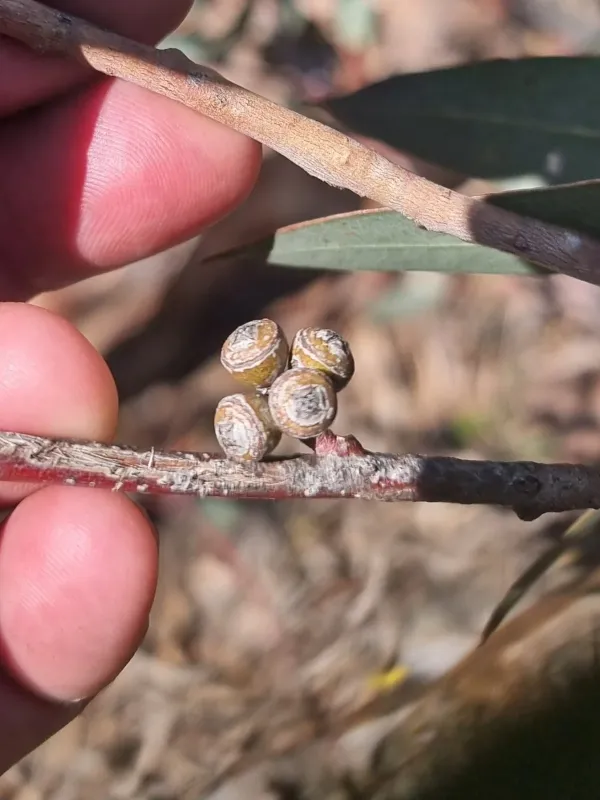
Description
Growing requirements
Tumbledown gum (Eucalyptus dealbata) is a tree species belonging to the Myrtaceae family. It is native to the inland regions of New South Wales and Queensland, Australia, where it is commonly found in dry sclerophyll forests.
The tree thrives in well-drained, nutrient-poor to moderately fertile soils. It is well-adapted to rocky, undulating terrain and is highly valued for its ability to tolerate significant dry spells once fully established.
Climatic preferences include warm to subtropical regions. While the species is somewhat resilient, it prefers areas that do not experience severe frost or extreme winter cold, which can damage the canopy.
The botanical structure consists of a spreading crown, smooth greyish-white bark that sheds in strips, and lance-shaped, glaucous leaves. It typically blooms with white flowers arranged in simple umbels.
Economically, this species is used in agroforestry for pulp production, fuel, and habitat restoration. Its essential oils, extracted from the foliage, are also analyzed for potential cosmetic and pharmaceutical applications.
Main diseases and pests
Fungal diseases such as leaf spot are common in environments with excessive humidity. Maintaining proper spacing between trees is essential to ensure adequate airflow and reduce disease outbreaks.
Root rot, often caused by poor drainage, remains a significant threat to young plantations. Selecting sites with appropriate soil texture is the primary step in risk management.
Pests such as sawfly larvae and various leaf-eating beetles can cause significant defoliation. Monitoring programs are usually required during the peak growing season to manage these populations.
Scale insects and aphids may infest new flushes of growth, particularly in nursery settings. Integrated pest management strategies are recommended to minimize chemical usage.
Sanitation practices, including the removal of deadwood and infected foliage, help maintain the overall health of the forest stand and prevent the spread of localized pathogens.