
Eucalyptus copulans
Eucalyptus copulans
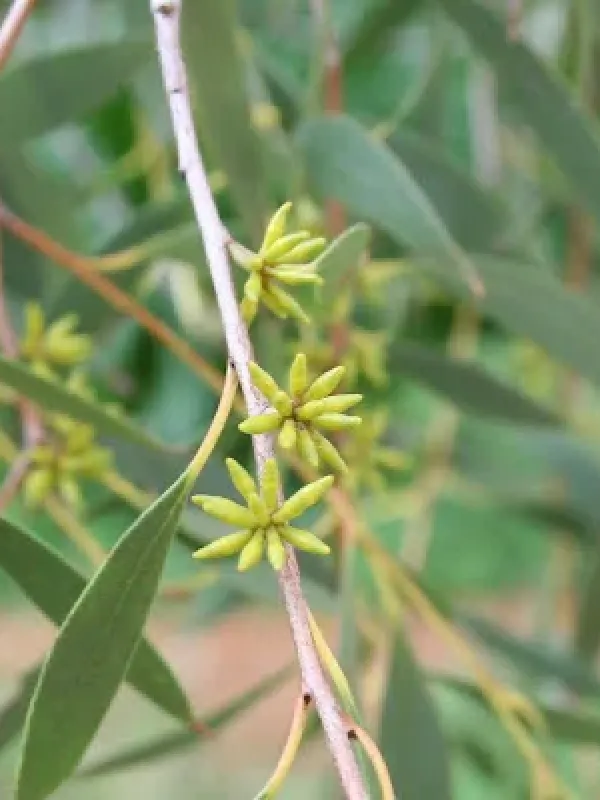
Description
Sowing dates
Sowing Eucalyptus copulans is primarily conducted using seeds in protected environments to ensure high germination rates and seedling survival. The process typically begins in late winter, allowing the plants to establish a robust root system before the spring warming period.
The seeds require a light, well-draining, and sterile growing medium to prevent seedling damping-off. They should be surface-sown and lightly covered with fine grit or vermiculite, maintaining high humidity until the initial sprouts appear.
Temperature management during the germination phase is critical; a range between +20°C and +24°C is optimal. Once seedlings emerge, providing adequate ventilation and gradually reducing ambient temperature helps in producing sturdy, non-leggy plants.
Pricking out the seedlings into individual containers should be done once the first set of true leaves develops. During this delicate stage, plants must be handled with care to prevent root disturbance, which can significantly delay their subsequent development.
Transplanting into the field or final containers occurs only after the last risk of frost has passed. In regions with harsh winters, Eucalyptus copulans is best maintained in pots, allowing for relocation to climate-controlled spaces to ensure survival.
Growing requirements
As a member of the Myrtaceae family, Eucalyptus copulans thrives under specific environmental conditions. It demands full sun exposure to maintain its growth rate and desirable foliage characteristics, as shade can lead to sparse development.
The species prefers well-drained, slightly acidic to neutral soils. It is highly sensitive to waterlogged conditions, which restrict oxygen availability to the roots and rapidly lead to root rot; thus, planting on slightly elevated beds is often recommended.
Climatic requirements involve moderate temperatures, ideally between +18°C and +28°C. While the species demonstrates some resilience once established, it generally lacks significant frost tolerance, necessitating protection in cold-prone areas.
Irrigation should be regular but measured, especially during the active growing season. Drought tolerance is an adaptive trait of mature eucalyptus, but young plants require consistent soil moisture to support their initial rapid biomass accumulation.
Nutrient management focuses on balanced fertilization, avoiding excessive nitrogen that promotes soft, succulent growth prone to snapping. Applying a complete slow-release fertilizer is usually sufficient to support the tree throughout its growth cycle.
Yield
The yield of Eucalyptus copulans is evaluated based on the biomass of harvestable stems and foliage. In a commercial setting, maximizing production involves intensive management techniques, including strategic pruning to promote branching.
Higher planting densities are often utilized to increase output, though this requires careful monitoring to ensure that air circulation remains adequate, preventing the development of disease outbreaks within the dense foliage canopy.
Productivity is directly linked to the age of the plantation and the vitality of the root systems. Periodic rejuvenation pruning is an essential practice to maintain the tree's output of high-quality, youthful foliage suitable for various markets.
Harvesting frequency can be optimized by adjusting nutrition and irrigation schedules. A well-managed plantation can provide multiple cuts per year, provided the plant is given sufficient time to recover between harvests.
Economic efficiency depends on maintaining uniformity in plant size and quality. Utilizing specialized harvesting equipment or skilled labor ensures that the stems are cut at the correct length, maximizing the value of the final product.
Main diseases and pests
Fungal pathogens, particularly those causing leaf spot and root rot, are the most significant threats to Eucalyptus copulans. These issues are frequently triggered by high humidity levels or poor drainage systems in the plantation.
Insects like aphids and spider mites can infest the soft, growing tips of the plants, particularly in greenhouse conditions. An integrated pest management program, involving regular monitoring and early intervention, is vital to prevent economic losses.
Mechanical damage during pruning or maintenance can open wounds that become susceptible to secondary infections. Using disinfected, sharp tools and ensuring clean cuts helps the plant seal its tissues more effectively after maintenance.
Weed control is essential, particularly during the early stages of establishment, as weeds compete for water and nutrients. Mulching can suppress weed growth while helping to regulate soil temperature and moisture levels around the base.
Maintaining biological diversity and avoiding monoculture cycles can help manage long-term disease risks. Regular rotation or renewing the plantation helps in keeping the population vigorous and less susceptible to localized outbreaks.
Harvesting
Harvesting Eucalyptus copulans involves precision cutting of stems that have reached the desired length and leaf maturity. Ideally, harvesting is performed during the cooler parts of the day to minimize transpiration and keep the product fresh.
The use of sharp, sanitized secateurs is non-negotiable to ensure clean, healthy cuts. Following harvest, stems should be immediately transferred to a cool, shaded environment and placed in water to maintain their post-harvest quality.
Sorting by length and stem robustness is a standard procedure in commercial operations. This categorization improves logistics, as it allows for uniform bunching and packaging, which increases appeal to end-customers and wholesalers.
Post-harvest handling also includes the removal of damaged leaves or stems that do not meet quality standards. Minimizing the time between cutting and cold storage is the most effective way to extend the shelf life of the harvested material.
Proper disposal of harvest residues is essential to maintain orchard hygiene. By clearing away debris, growers reduce the risk of pests and pathogens harboring within the plantation, ensuring a healthier start for the next growth flush.