
Coolabah
Eucalyptus coolabah
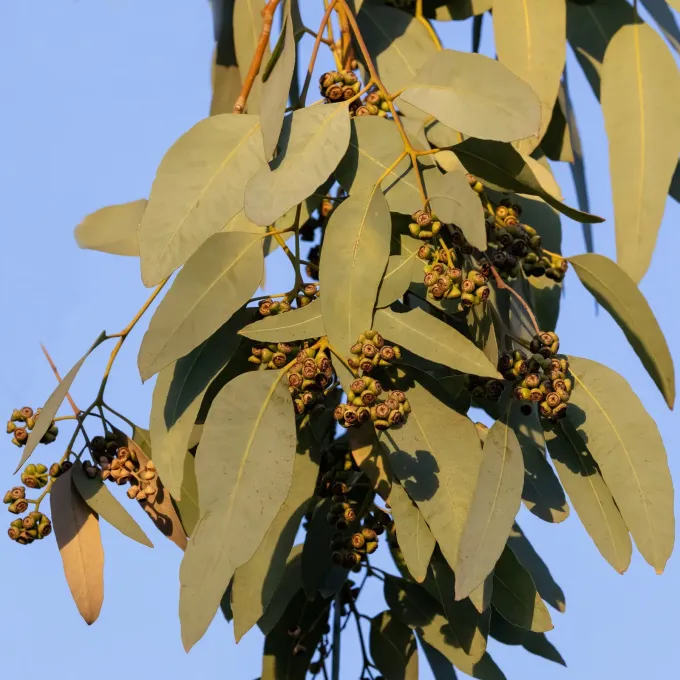
Description
Sowing dates
The propagation of Eucalyptus coolabah is primarily achieved through seeds, which require specific conditions to break dormancy and ensure high germination rates.
Seeds are typically sown in a controlled nursery environment, using a well-draining potting medium that mimics the arid soil conditions of its native habitat.
Spring is the most favorable season for sowing, as the increasing light levels and rising temperatures trigger healthy seedling development.
Once seedlings have reached a sufficient height and robustness, they are hardened off before being transplanted into their permanent field locations.
Careful attention must be paid to spacing during field planting to prevent overcrowding, which can otherwise inhibit the straight growth of the main trunk.
Growing requirements
Eucalyptus coolabah is a hardy member of the Myrtaceae family, evolved specifically to thrive in the harsh and variable climates of inland Australia.
The tree demonstrates exceptional adaptability to various soil types, particularly flourishing in heavy clay soils that are prone to periodic inundation.
Full sun exposure is a mandatory requirement for this species; it is highly intolerant of shade and requires unrestricted access to light for optimal growth.
The species is renowned for its extreme drought tolerance, capable of sustaining itself in regions where annual rainfall is scarce and highly irregular.
While mature trees are remarkably resilient, young plants require protection from frost and severe winds during their initial establishment phase in the field.
Yield
The primary economic output of this species is its exceptionally dense and hard wood, which is highly valued for its natural durability and resistance to decay.
Timber harvested from the Coolabah tree is frequently utilized in infrastructure projects, such as the production of heavy-duty fence posts and railway sleepers.
Beyond timber production, this species serves a critical role in land reclamation, effectively stabilizing soils and preventing wind erosion in degraded landscapes.
The tree's biomass provides a consistent and efficient fuel source, making it a viable candidate for sustainable bioenergy production in arid zones.
Yield estimation is a long-term endeavor, as the slow growth rate of the species reflects its focus on structural density rather than rapid volumetric expansion.
Main diseases and pests
Leaf-eating insects, including various species of beetles and caterpillars, can cause significant defoliation, which hampers the tree's overall photosynthetic capacity.
Root rot, often caused by pathogenic fungi in waterlogged conditions, remains the most significant threat to the health of the root system.
Monitoring for signs of wood-boring insects is crucial, as their activities can degrade the quality of the timber, rendering it unsuitable for structural use.
Integrated Pest Management (IPM) strategies are recommended to maintain tree health without relying excessively on broad-spectrum chemical interventions.
- Regular inspection of the canopy
- Ensuring adequate soil drainage
- Strategic removal of infected plant debris
Harvesting
Harvesting strategies for Eucalyptus coolabah focus on long-rotation cycles, with trees typically being managed for several decades before maturity is reached.
The logging process must be executed with precision to maximize wood quality, as the timber is known to be difficult to process if harvested incorrectly.
Regeneration after harvest is often successful via coppicing, where the stumps naturally produce new shoots, eliminating the need for expensive replanting efforts.
Harvesting operations should be coordinated to minimize soil disturbance, ensuring that the ecological integrity of the planting site is preserved for the next crop.
Proper timber drying and curing protocols are essential post-harvest to prevent splitting and to guarantee the stability of the wood for its final application.