
Brooker's Gum
Eucalyptus brookeriana
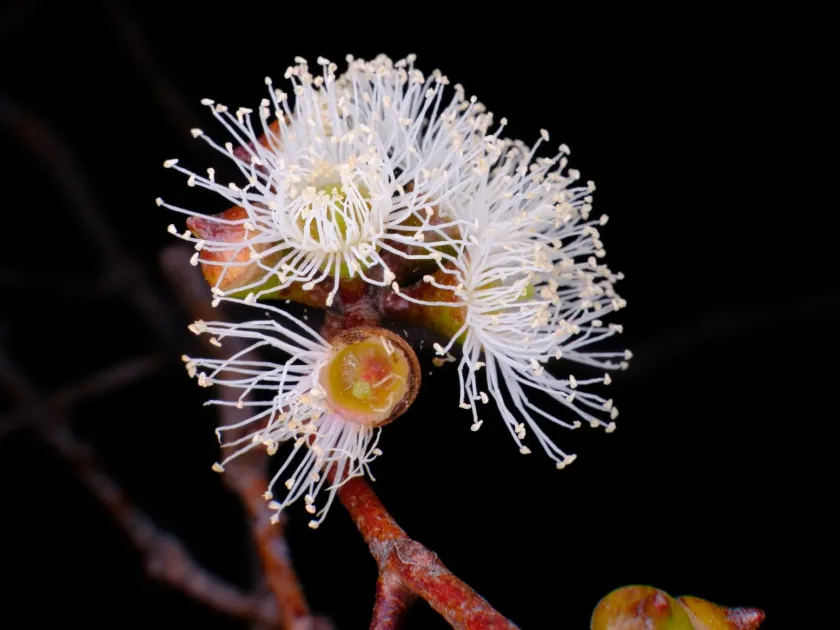
Description
Growing requirements
Brooker's Gum (Eucalyptus brookeriana) is a tall evergreen tree belonging to the Myrtaceae family. It is known for its relatively rapid growth and its aesthetic value, often featuring a smooth, exfoliating bark that peels in long strips, characteristic of many Tasmanian eucalyptus species.
The native distribution of this species is primarily limited to southeastern Australia and Tasmania. It naturally thrives in cool, moist, and fertile environments, often found near permanent watercourses or in damp gullies where soil moisture is reliably abundant throughout the year.
For cultivation, this species requires a climate with mild to cool temperatures and high annual rainfall. While it demonstrates higher frost tolerance than many tropical eucalypts, it thrives best in environments that mimic its oceanic climate, avoiding extreme heat or arid conditions.
The soil requirements are specific: the tree prefers deep, well-draining loams that retain sufficient moisture. Waterlogging must be avoided, although the plant has a higher tolerance for moisture than many other eucalyptus varieties, provided there is enough oxygen in the root zone.
Economically, Eucalyptus brookeriana is cultivated primarily for its timber, which is utilized in furniture manufacturing and construction. Furthermore, its foliage is often investigated for essential oil production, offering secondary value for chemical and pharmaceutical applications.
Main diseases and pests
The primary pests affecting Brooker's Gum are leaf-eating beetles, particularly those from the Chrysomelidae family. These insects can cause significant damage to the canopy, leading to reduced photosynthetic capacity and retarded growth rates in plantations.
Fungal diseases are a persistent threat, especially in humid and stagnant conditions. Common issues include various leaf spots and dieback caused by Phytophthora species or other opportunistic pathogens that exploit stressed trees.
Root rot represents a serious concern for young stands established on suboptimal soil sites with poor drainage. Once established, these fungal infections are difficult to eradicate, emphasizing the need for proper site selection and soil preparation before planting.
Environmental stress, such as prolonged drought or extreme climate events, can compromise the tree's natural defense mechanisms. This makes the stands more susceptible to boring insects, which target the woody parts of the tree and permanently damage timber quality.
Effective management requires a proactive approach, including strict adherence to silvicultural practices such as thinning and pruning. By maintaining healthy, vigorous trees, the vulnerability to pests and diseases is kept to a manageable level.