
Eucalyptus brockwayi
Eucalyptus brockwayi
Description
Growing requirements
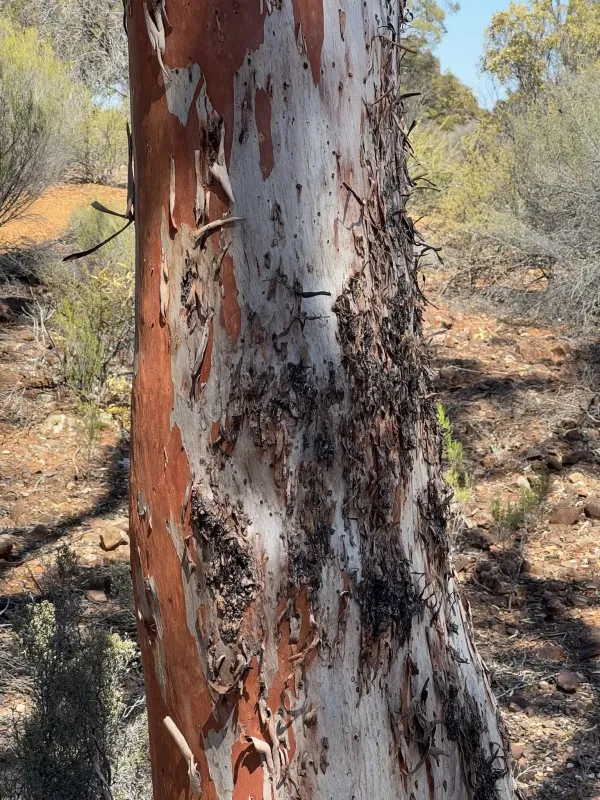
Eucalyptus brockwayi, commonly known as Brockway's gum, belongs to the Myrtaceae family. It is a robust evergreen tree capable of growing up to 25 meters tall, featuring a distinct, straight, and slender trunk.
Native to a limited range in the eastern Goldfields region of Western Australia, this species is well-adapted to semi-arid environments. Its evolutionary history makes it highly tolerant to drought conditions.
The species prefers well-drained, calcareous, or stony soils that are typical for low-rainfall areas. Despite its arid origins, the tree demonstrates a positive growth response to irrigation during the initial stages of establishment.
For optimal development, this eucalyptus requires high levels of solar radiation and protection from severe, prolonged frost. While it can withstand minor cold spells, young specimens are susceptible to damage from intense freezing.
Silvicultural practices for this species include careful soil preparation, weed management during the establishment phase, and the creation of shelterbelts. With proper management, the tree shows rapid biomass accumulation.
Yield
The primary economic use of Eucalyptus brockwayi is the production of high-quality timber. Its wood is known for being dense, heavy, and extremely durable, making it ideal for flooring and furniture production.
Due to its natural resistance to decay, the timber is suitable for outdoor construction and heavy-duty structural applications. It is also increasingly used in reforestation projects aimed at restoring degraded landscapes.
Yields in commercial plantations depend heavily on spacing and early intervention. Foresters often perform pruning of lower branches to encourage the growth of a clear, straight trunk, which increases the value of the harvested wood.
Besides its timber value, the species serves as a source of nectar for pollinators. Its flowers attract bees, allowing for the potential production of unique monofloral eucalyptus honey in suitable regions.
The overall wood production capacity of this species is highly regarded in dry-land forestry, as it consistently outperforms many other local hardwood species in terms of volume growth in arid environments.
Main diseases and pests
Eucalyptus brockwayi possesses a strong natural defense against many pests and diseases typical of forest ecosystems. However, maintaining balanced soil conditions is essential to keep the root systems healthy.
The most common threats to young plantations are leaf-eating insects, such as beetles and weevils. Regular scouting of the plantations is recommended to detect any pest outbreaks before they cause significant defoliation.
Root rot remains a concern if the soil is poorly drained or prone to waterlogging. Careful site selection and soil analysis before planting are crucial strategies to mitigate this risk.
In certain regions, fungal infections leading to leaf spotting can occur. If such diseases are detected, standard application of broad-spectrum fungicides may be necessary to protect the health of the stand.
Implementing strict sanitation protocols, including the removal of dead or diseased biomass, is a highly effective way to prevent the spread of infestations and maintain the overall vigor of the plantation.