
Black box
Eucalyptus bicolor
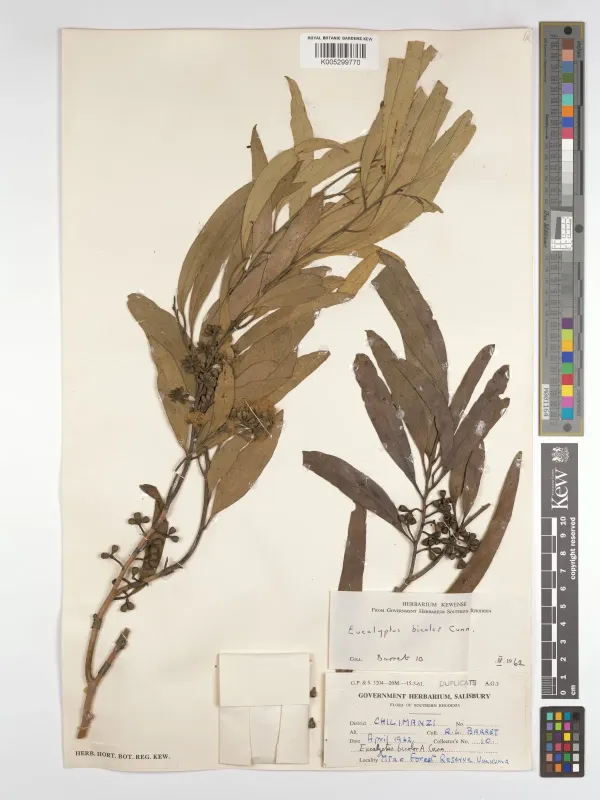
Description
Sowing dates
Sowing of Eucalyptus bicolor in industrial settings is typically carried out in nurseries during late winter or early spring. The seeds are highly viable but benefit significantly from proper stratification to ensure uniform germination.
Seeds should be sown in trays filled with a light, well-draining substrate. Maintaining constant temperature and humidity levels during the germination phase is critical for achieving high-quality seedlings.
Transplanting saplings into the field is generally timed with the start of the rainy season, ensuring the young trees have sufficient moisture to establish their root systems effectively.
The planting pattern varies depending on forestry objectives, usually ranging from 2.5 to 3 meters between rows. Higher density planting encourages the development of straight trunks, which is essential for timber quality.
During the first few months after planting, careful weed management is necessary to prevent competition for sunlight and essential soil nutrients, allowing saplings to thrive.
Growing requirements
Eucalyptus bicolor, commonly known as black box, is a member of the Myrtaceae family. Native to eastern Australia, it is well-adapted to the challenging conditions of floodplains and alluvial flats.
This species thrives in heavy clay soils that are subject to periodic inundation. It possesses a remarkable tolerance for waterlogged conditions that would be detrimental to many other tree species.
Optimal temperatures for active growth range from 18 to 28 degrees Celsius. The tree displays moderate frost resistance but generally avoids areas with severe, prolonged sub-zero temperatures.
The tree is strongly light-demanding and requires open, sun-drenched locations to grow. In shaded conditions, development significantly slows, often resulting in poor structural growth.
While nutrient requirements are moderate, early-stage application of nitrogen-phosphorus fertilizers can significantly accelerate biomass production and overall tree vigor.
Yield
The primary value of Eucalyptus bicolor lies in its extremely hard, dense timber, which is highly prized for its durability and resistance to decay. It is a preferred material for posts, sleepers, and heavy-duty structural components.
Secondary uses include pulp production from wood waste. The commercial harvest cycle usually spans 20 to 30 years, depending on the site conditions and the intended final product.
Eucalyptus foliage is also a source of essential oils used in pharmaceutical and aromatic industries, though timber production remains the primary economic driver for large-scale forestry.
Because of its ability to thrive in heavy, water-retentive soils, the species serves an important land reclamation function, helping to drain wetlands and stabilize riverbanks against erosion.
Overall profitability is driven by the species' adaptability to marginal land where traditional agricultural crops often fail, providing a consistent supply of durable wood products.
Main diseases and pests
The primary threats to eucalyptus plantations include leaf-feeding insects, particularly beetles and weevils. Large-scale infestations can cause severe defoliation, significantly impacting tree health.
Fungal diseases, such as leaf spot or root rot, may occur in high-humidity or poorly ventilated environments. Proper site management and spacing are essential for prevention.
Strong winds can pose a risk to young trees during their peak growth phases. Utilizing windbreaks or temporary staking in exposed areas helps maintain the structural integrity of the saplings.
Soil-borne nematodes can potentially damage root systems, necessitating sanitary inspections of soil health before establishing new plantations on previously cropped land.
Consistent monitoring of plantation health is vital. Early detection of pest populations allows for targeted interventions, preventing widespread damage across the managed area.
Harvesting
Harvesting Eucalyptus bicolor is conducted using specialized logging machinery. Trees are felled close to the ground, followed by de-limbing and sorting to maximize timber value.
The species has a natural ability to regenerate through coppicing. After harvest, new shoots can emerge from the stumps, offering a cost-effective method for establishing the next rotation.
The optimal time for harvest is during the dry season, which keeps wood moisture content lower, simplifying transport and accelerating the drying process of the harvested timber.
Post-harvest site cleanup is essential to reduce fire risks and remove organic material that might harbor pests, ensuring the area is prepared for natural or assisted regeneration.
Logs are transported to processing facilities for final cutting and antiseptic treatment, ensuring the timber reaches the market in a condition suitable for its varied industrial applications.