
Callistemon pinifolius
Callistemon pinifolius
Description
Growing requirements
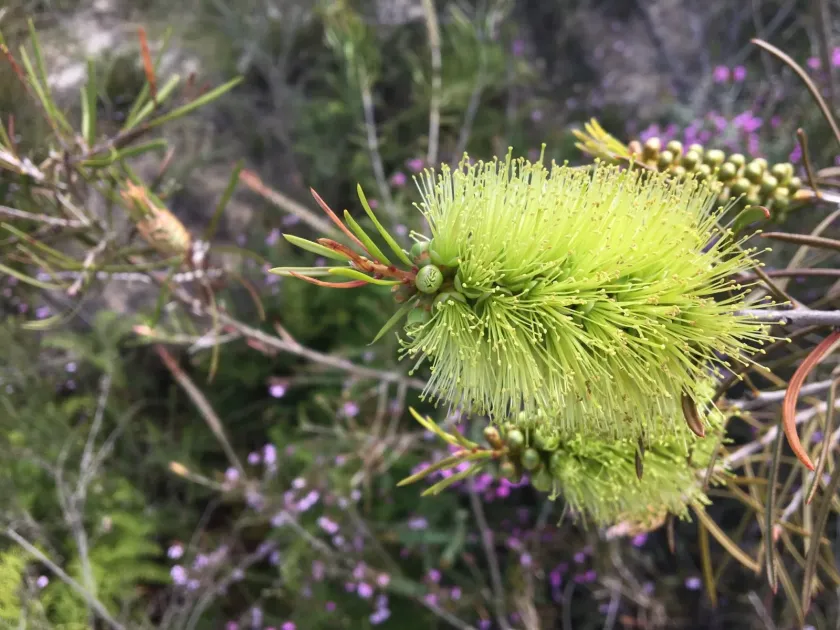
Callistemon pinifolius, commonly known as the pine-leaved bottlebrush, is a member of the Myrtaceae family native to the coastal regions of eastern Australia. It is a distinctive evergreen shrub prized for its needle-like foliage and unique inflorescences.
This species thrives in full sun and requires well-drained, acidic to neutral soil to reach its full potential. It is particularly well-adapted to sandy soils, mimicking its natural habitat where it often grows in wetlands or damp sandy scrubland.
Watering is a critical aspect of its cultivation; while it prefers moisture, it must not be left in waterlogged conditions for extended periods. Regular deep watering during the active growth season is essential for healthy foliage development and robust flowering.
Pruning is recommended immediately after the flowering season to maintain a compact shape and encourage denser branching. This process ensures the plant remains manageable in garden settings and promotes stronger growth for the following cycle.
Temperature tolerance is limited, as the plant is sensitive to severe frost. In temperate climates, it is best kept in containers, moved to a protected location or a bright greenhouse during the winter months to avoid temperature-related damage.
Main diseases and pests
The most common pests affecting Callistemon pinifolius are spider mites, which thrive in hot and dry environments. Infestations are typically identified by the presence of fine webbing on the leaves and can be treated with insecticidal soaps or acaricides.
Mealybugs are another potential threat, often found in the leaf axils. These sap-sucking insects can cause stunted growth, so regular inspection of the stems is necessary to catch infestations at an early stage before they spread throughout the plant.
Root rot, primarily caused by Phytophthora species, is a significant risk if the soil drainage is inadequate. Ensuring that the pot or planting hole allows excess water to escape is the most effective preventative measure against fungal root infections.
Iron chlorosis frequently occurs if the irrigation water is too alkaline, preventing the plant from absorbing necessary nutrients. Using rainwater or applying iron chelate supplements usually restores the vibrant green color of the leaves effectively.
General fungal leaf spots may appear during prolonged wet weather, especially if airflow around the plant is insufficient. Maintaining adequate spacing between plants and keeping the foliage as dry as possible during the evening hours are key cultural practices.