
Callistemon brachyandrus
Callistemon brachyandrus
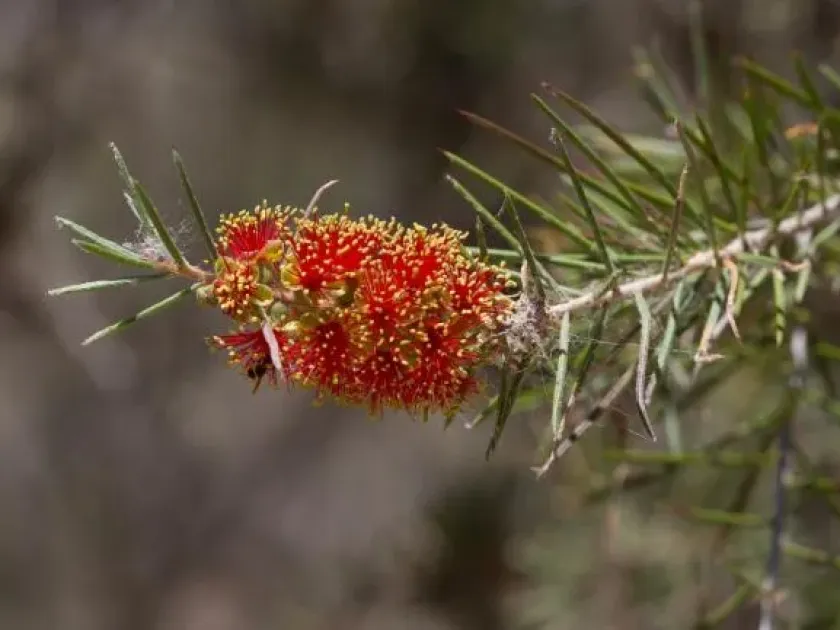
Description
Growing requirements
Callistemon brachyandrus, commonly known as the prickly bottlebrush, belongs to the Myrtaceae family. Native to the arid regions of Australia, this evergreen shrub is highly valued for its striking, brush-like red flower spikes that appear throughout the growing season.
The plant thrives in full sun, which is essential for healthy development and flowering. While it is hardy in Mediterranean climates, in cooler regions, it must be grown in containers and moved indoors during the winter months to avoid frost damage.
Regarding soil preferences, it requires well-drained, slightly acidic to neutral soil. Drainage is the most important factor in its cultivation, as the roots are sensitive to waterlogging and can quickly succumb to rot if kept in soggy conditions.
Cultivation practices involve consistent watering during the growing season, allowing the top layer of soil to dry out between sessions. Reducing irrigation significantly during winter induces the dormancy necessary for the plant to bloom vigorously in the following spring.
In terms of хозяйственное (economic) use, Callistemon is primarily an ornamental shrub. It is often used in xeriscaping, as a focal point in landscapes, or as a dense hedge in frost-free regions, contributing to biodiversity in the garden.
Main diseases and pests
Typical pests for Callistemon brachyandrus include spider mites, scale insects, and mealybugs. These pests frequently appear when the plant is kept in overly dry environments with poor air circulation, necessitating regular monitoring.
Diseases such as root rot are the most common issue, usually resulting from poor drainage or overwatering. Once root rot is established, it is difficult to remediate, so prevention through proper substrate management is key.
Iron chlorosis is another potential issue, especially when the plant is irrigated with hard water. The foliage may turn pale or yellow, indicating that the plant is unable to absorb essential nutrients due to high soil pH.
To control pests, organic or chemical insecticidal soaps can be applied. Keeping the plant vigorous through balanced fertilization during the active growing season helps it resist minor infestations more effectively.
Pruning is essential for maintaining plant health and structure. Removing dead wood or branches that cross each other helps improve airflow, significantly reducing the likelihood of fungal infections and keeping the canopy clean.