
Baeckea leptocaulis
Baeckea leptocaulis
Description
Growing requirements
Baeckea leptocaulis is a perennial shrub belonging to the Myrtaceae family. Native to the western regions of Australia, this plant is well-known for its delicate, fine-textured appearance and its role in the unique biodiversity of the Australian scrublands.
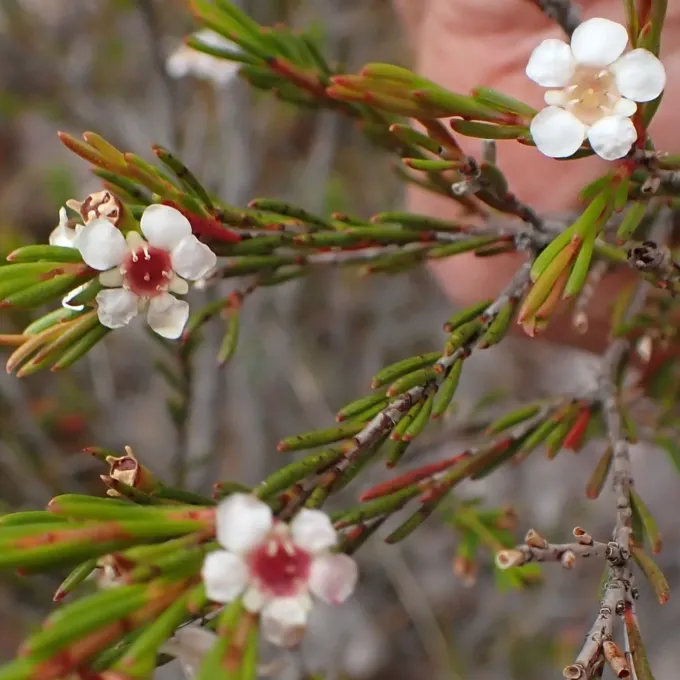
Botanically, the species is defined by its slender stems—from which the Latin name leptocaulis is derived—and its small, narrow leaves. The plant produces dainty flowers, typically white or pale pink, which appear during the blooming season to create a subtle ornamental effect.
For successful cultivation, the species requires excellent drainage, as it is highly prone to root rot in saturated soil. Sandy or gritty soils with low nutrient content mimic its natural habitat and are ideal for preventing physiological disorders associated with waterlogging.
The plant thrives in sunny, open locations with well-ventilated conditions. While it exhibits strong drought tolerance, young plants need consistent moisture until they are established, after which they can withstand drier periods typical of their indigenous climate.
Economically, Baeckea leptocaulis is utilized primarily in the nursery trade for specialized ornamental gardening. It serves as an excellent choice for xeriscaping or rock gardens where unique, low-maintenance, and aesthetically pleasing foliage is desired.
Main diseases and pests
The primary threats include soil-borne pathogens like Phytophthora, which thrive in poorly drained environments. Indoor or greenhouse specimens should also be monitored for common pests such as aphids or spider mites, which can proliferate in stagnant air conditions.